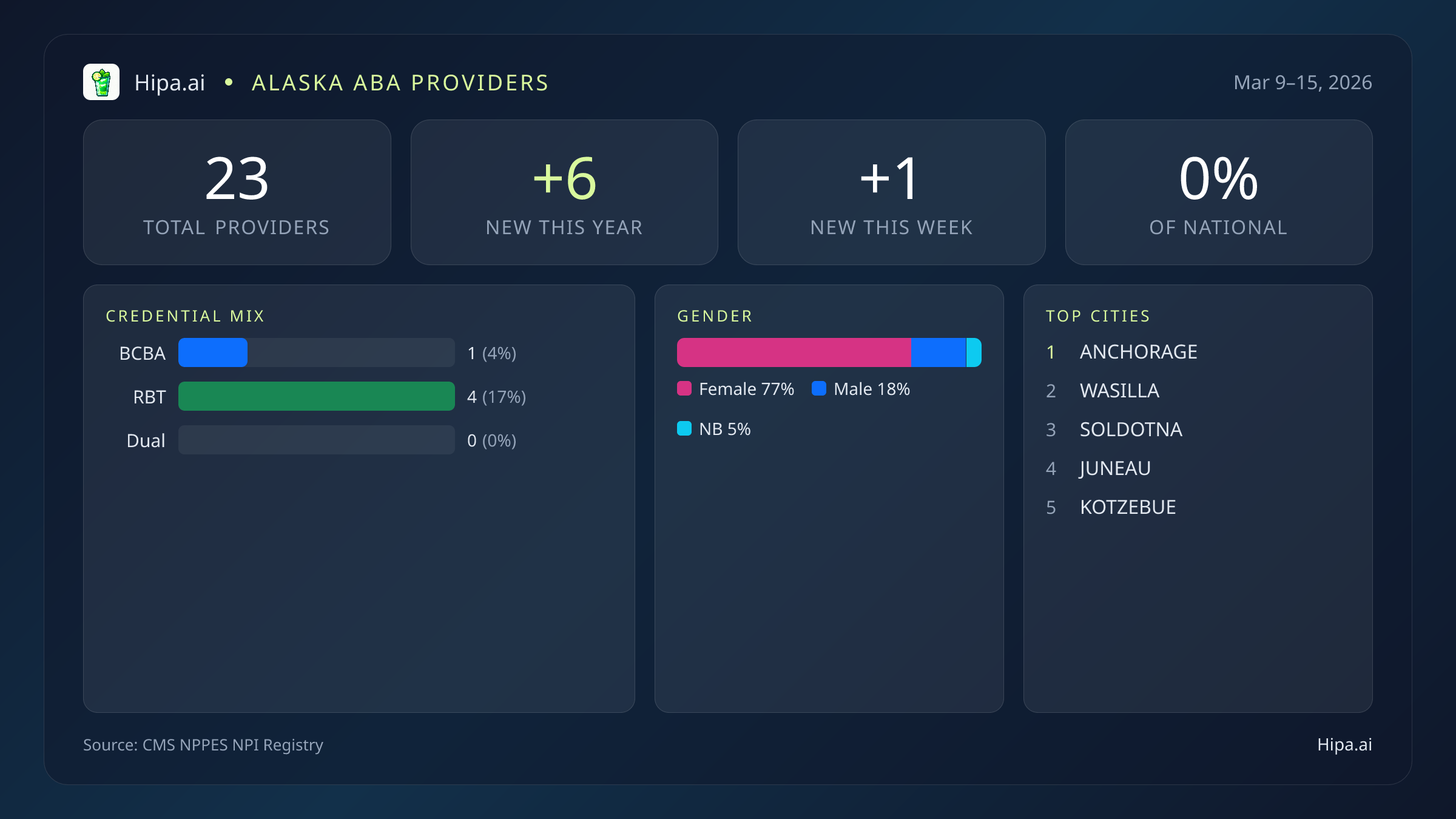
Alaska's behavioral health sector saw a total of 23 providers in the latest CMS NPI registry weekly update. This represents 0% of the national weekly total, indicating a minimal contribution to the broader national pool. The state added 1 new provider this week, contributing to a total of 6 new providers year-to-date. This limited activity is characteristic of Alaska’s sparse population and often signals significant challenges in workforce recruitment and access to specialized behavioral health services.
Credential Mix and Supervision Capacity
Among individual providers, the data shows 1 BCBA and 4 RBTs. It is important to note that no providers hold dual BCBA and RBT credentials in this update. This 4:1 RBT to BCBA ratio suggests a very limited supervisory infrastructure for ABA services, which is critical for ensuring quality care and RBT development. Additionally, one individual holds an LBA license, indicating state-level licensure layered onto professional credentials, a key for independent practice in some states.
Workforce Demographics and Scope
The workforce demographics in Alaska reveal a predominantly female presence, with 17 female providers accounting for 77% of the individuals. 4 male providers make up 18%, and 1 provider identifies as nonbinary, representing 5%. No specific organizations appeared multiple times in this week's data. Furthermore, 9 providers hold multiple taxonomies, suggesting a diverse skill set and broader scope of practice within Alaska's behavioral health community, potentially to address varied needs in a resource-constrained environment.
This data points to a small, predominantly female behavioral health workforce in Alaska, facing significant challenges in providing comprehensive ABA services due to limited supervisory capacity, underscoring the ongoing need for workforce development and recruitment efforts.