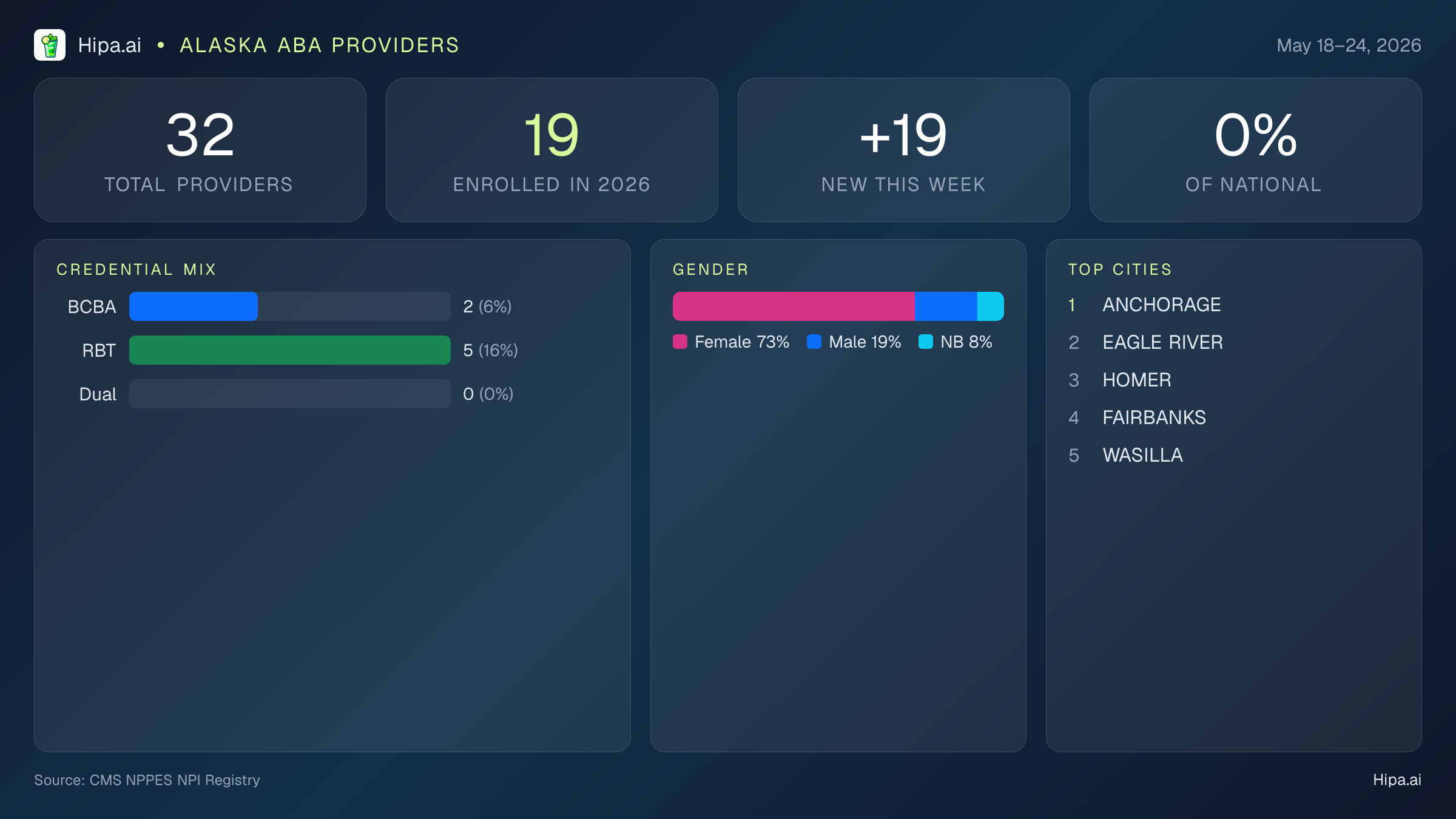
Alaska added 32 behavioral health providers in the latest CMS NPI registry weekly update. While this represents 0% of the national total, for a state with a smaller population and unique geographic challenges, even a modest number of new providers can significantly impact local access to care.
ABA Workforce Dynamics
Within the applied behavior analysis (ABA) sector, the data shows 2 BCBA credentials and 5 RBT credentials. It's important to note that these counts represent the primary ABA-specific taxonomies identified. There were no individuals holding both BCBA and RBT credentials in this update. The ratio of 2.5 RBTs for every BCBA suggests a limited supervisory capacity for direct ABA service delivery, which is common in states with emerging or smaller ABA workforces, indicating a bottleneck for scaling services.
Provider Demographics
Of the 26 individual providers registered, 19 (73%) are female, 5 (19%) are male, and 2 (8%) identify as nonbinary. This gender distribution aligns with broader trends observed in the behavioral health workforce. No organizations appeared multiple times in this week's new registrations, suggesting a diverse spread of smaller practices or individual providers rather than dominant multi-state chains.
The modest increase in ABA professionals, particularly RBTs, indicates some growth in direct service capacity. However, the low number of new BCBAs highlights an ongoing need for supervisory-level professionals to sustainably expand ABA access in Alaska.