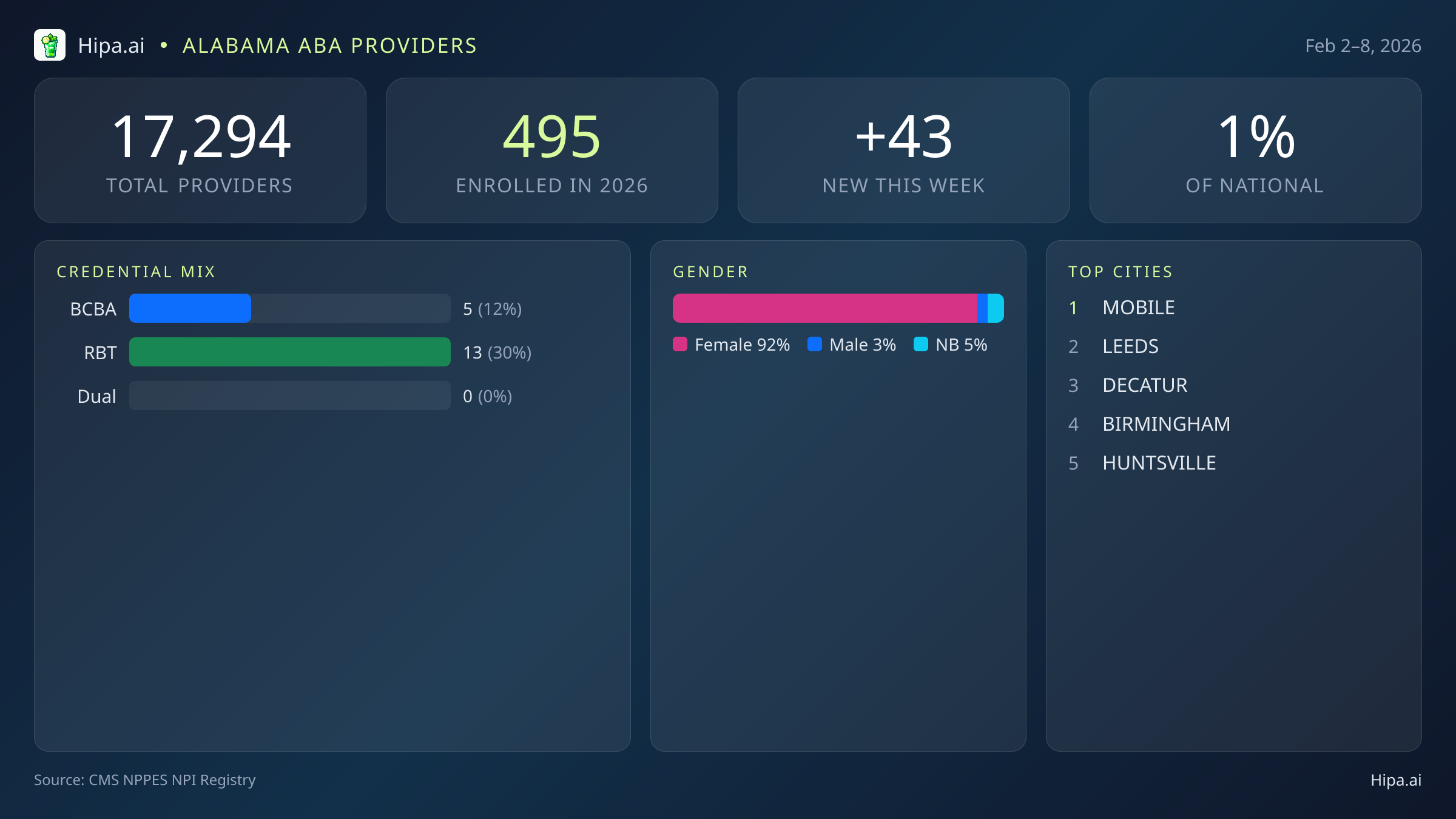
Alabama saw 43 new behavioral health providers added to the CMS NPI registry this week, representing 1% of the national total. This relatively small influx suggests a steady but not explosive growth in the state's behavioral health sector, potentially indicating a developing market or a more localized demand for services compared to larger states. Of these, 37 individuals and 6 organizations were added.
ABA Workforce Composition
Focusing on applied behavior analysis, the data shows 5 new BCBAs and 13 new RBTs. It's important to note that these counts reflect primary credentials or taxonomies and may not capture all roles if a provider holds multiple certifications. There were no providers identified with dual BCBA and RBT credentials in this update. The ratio of RBTs to BCBAs, approximately 2.6 to 1, is lower than the typical 4-5 RBTs per BCBA often seen in established clinics. This ratio could point to a need for more BCBA-level supervisors to support a growing RBT workforce and expand ABA service capacity in Alabama.
Provider Demographics
Among the 37 individual providers, the workforce is overwhelmingly female, with women accounting for 92%. Male providers represent 3%, and 5% identify as nonbinary. No specific organizations appeared multiple times in this week's data, indicating a diverse range of new entities rather than a single dominant employer.
The current composition suggests Alabama is building its ABA workforce, but continued growth in BCBA numbers will be crucial to maximize service access and quality.