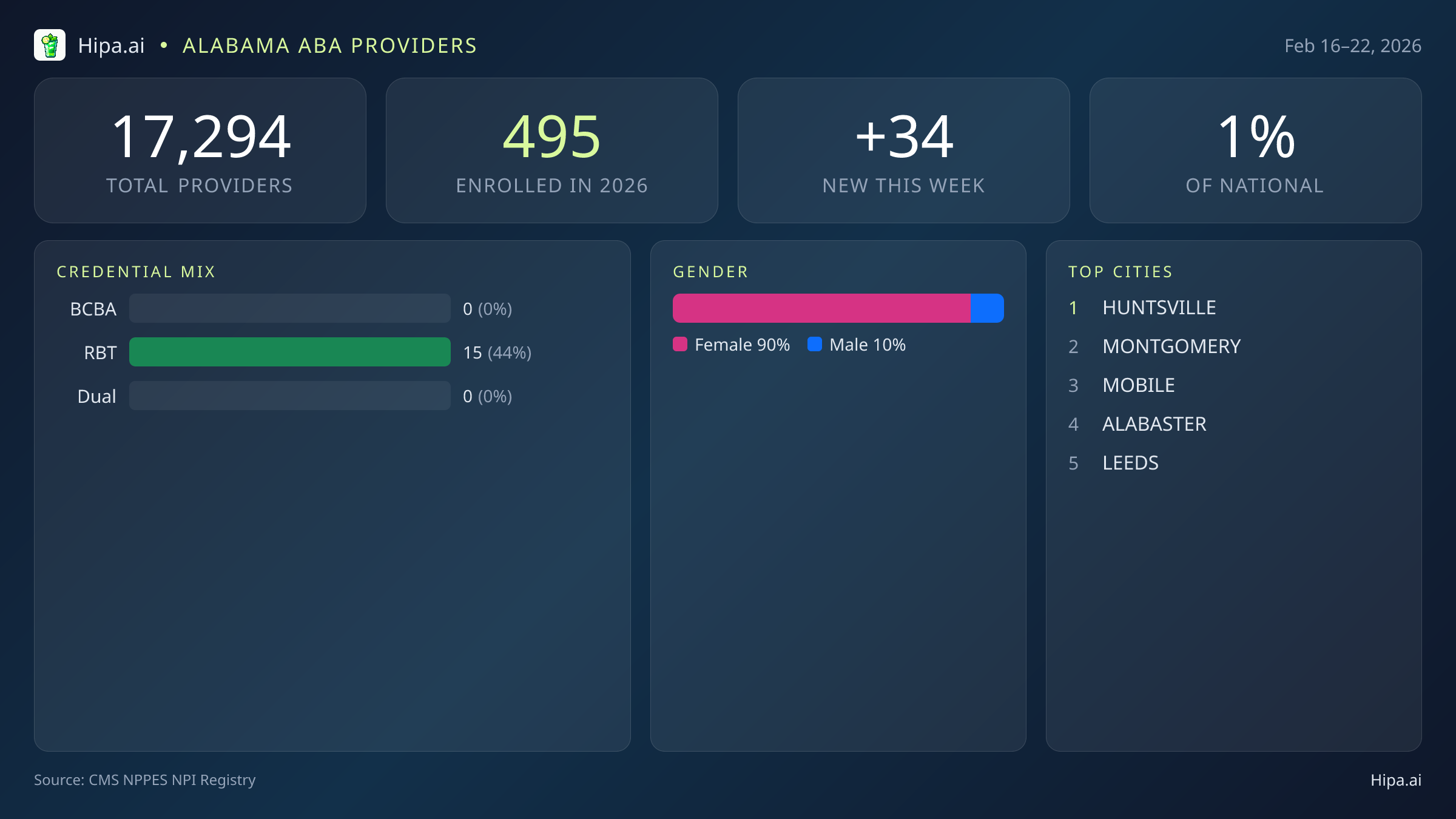
Alabama added 34 behavioral health providers in the latest weekly CMS update, representing 1% of the national total. All 34 providers are new this week, comprising 30 individuals and 4 organizations. This modest share suggests a steady, rather than explosive, growth in the state's behavioral health workforce.
ABA Workforce Composition
The data shows 15 Registered Behavior Technicians (RBTs) whose primary taxonomy is RBT among the new individual providers, indicating a continued focus on direct service delivery in applied behavior analysis. Notably, there are no new Board Certified Behavior Analysts (BCBAs) or individuals with dual BCBA+RBT credentials this week. This absence of new BCBAs is significant for the ABA industry, as BCBAs are essential for supervising RBTs and providing clinical oversight. The data also includes other professionals such as one Speech-Language Pathologist (M.S., CCC-SLP), three Associate Licensed Counselors (ALC), one Licensed Independent Clinical Social Worker (LICSW), one Licensed Clinical Social Worker (LCSW), and one Licensed Professional Counselor (LPC), reflecting a broader behavioral health landscape.
Provider Demographics
Among the 30 individual providers, the workforce is predominantly female, with women accounting for 90% (27 individuals). Male providers make up 10% (3 individuals). No organizations appeared multiple times in this week's update. The new providers are distributed across several key cities, including Huntsville, Montgomery, Mobile, Alabaster, and Leeds, suggesting a geographic spread of new services.
The lack of new BCBAs this week, despite new RBTs, highlights a potential bottleneck in supervision capacity for ABA services in Alabama, which could impact overall access.