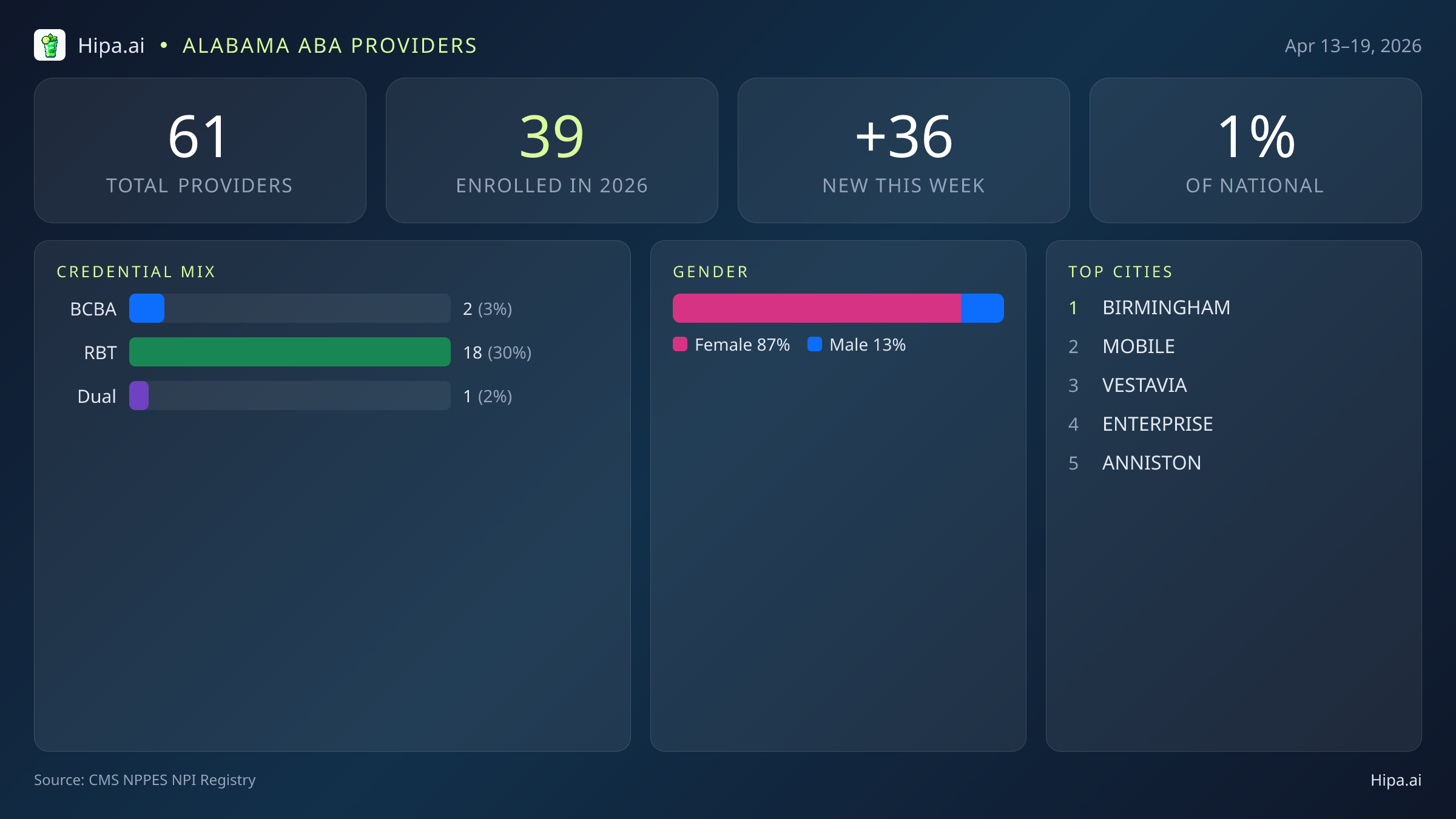
Alabama's behavioral health sector saw 61 new behavioral health providers in the latest CMS NPI registry update, representing 1% of the national weekly total. Of these, 36 new this week, indicating a consistent, albeit smaller, influx of professionals. This growth comprises 53 individual providers and 8 organizations, contributing to the state's expanding healthcare landscape.
Credential Mix and Supervision Capacity
Within this cohort, the ABA workforce shows a specific credential distribution. The data identifies 2 Board Certified Behavior Analysts (BCBAs) and 18 Registered Behavior Technicians (RBTs) by credential. It is important to note that one provider holds both BCBA and RBT credentials, indicating a dual certification. Additionally, one BCBA also holds an LBA license, reflecting state-level licensure. This ratio of 18 RBTs to 2 BCBAs highlights a significant need for more supervisory-level BCBAs to support the growing RBT workforce and expand direct ABA service capacity in Alabama.
Workforce Demographics
Among the 53 individual providers, the workforce is predominantly female, with 46 women making up 87%. Male providers account for 7 individuals, or 13%. This gender distribution is consistent with broader trends observed in the behavioral health field. No specific organizations appeared multiple times in this week's data, suggesting a diverse range of smaller practices or new entries rather than expansion by dominant multi-state chains.
This data suggests a continued, albeit moderate, expansion of the behavioral health workforce in Alabama, particularly within the RBT segment, underscoring the ongoing demand for ABA services and the critical need for increased BCBA supervision.