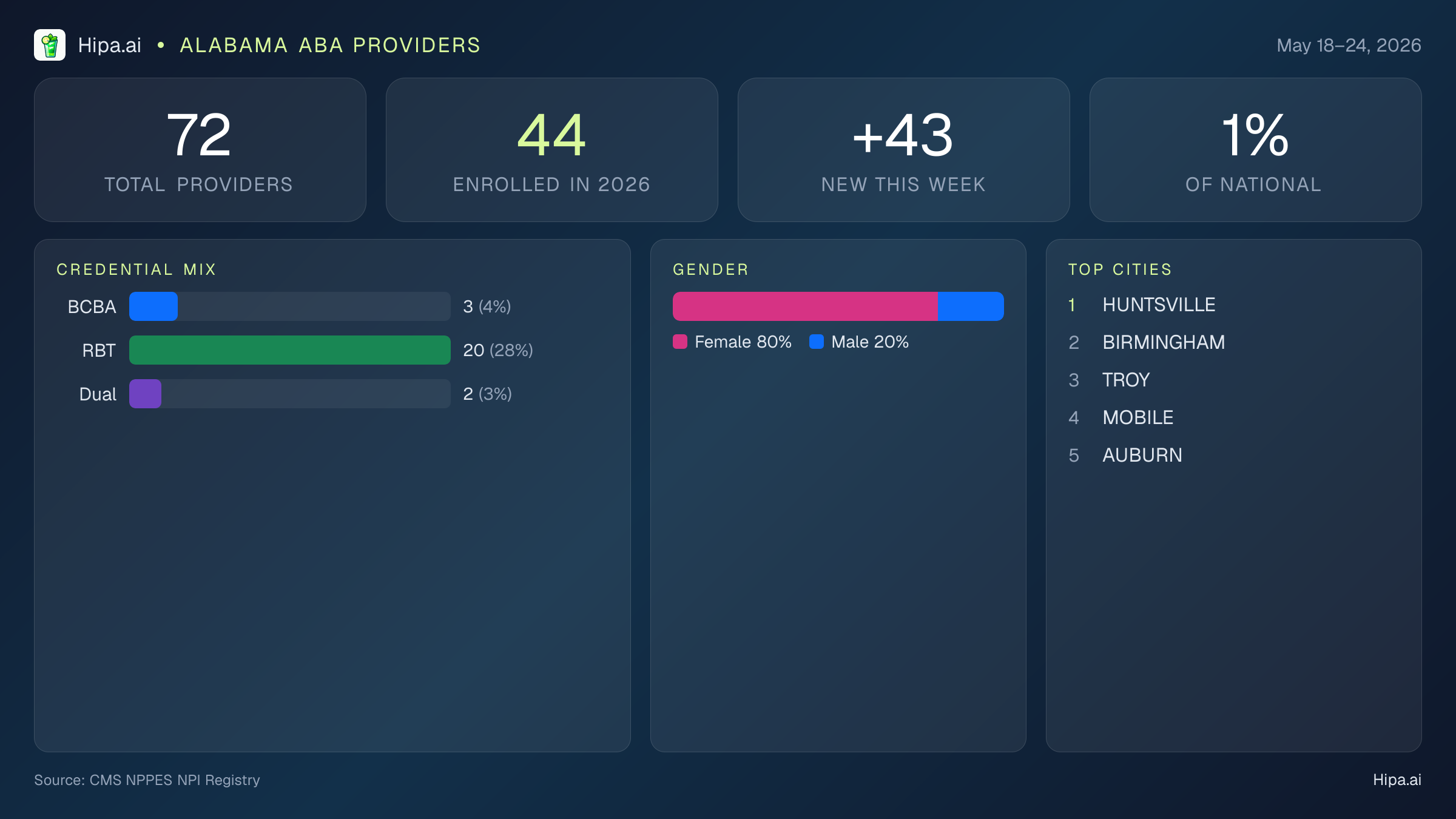
Alabama added 72 new behavioral health providers in the latest CMS NPI registry weekly update, representing 1% of the national total. This modest but consistent contribution indicates a steady, localized growth in the state's behavioral health sector, reflecting ongoing efforts to expand care access.
ABA Workforce Composition
Within the applied behavior analysis (ABA) field, the update shows 3 providers with BCBA credentials and 20 providers with RBT credentials. It is important to note that these credential categories can overlap, as 2 individuals hold both BCBA and RBT credentials, signaling a common career progression from direct service technician to a supervisory role. The approximate 6.7-to-1 ratio of RBTs to BCBAs suggests a solid base for direct service delivery, but it also highlights a potential strain on supervision capacity. This imbalance underscores the critical need for more BCBA supervisors to maintain ethical standards, ensure quality care, and facilitate the growth of RBTs in the state.
Provider Demographics
Of the 61 individual providers, 49 (80%) are female and 12 (20%) are male. This gender distribution is consistent with broader trends in the behavioral health industry, which is predominantly female. No specific organizations appeared multiple times in this week's data to indicate a dominant employer or training pipeline.
This continued growth in Alabama's behavioral health workforce, particularly among direct service providers like RBTs, suggests an expanding capacity for care. However, strategically addressing the RBT-to-BCBA ratio will be crucial for ensuring sustainable, high-quality ABA service delivery and improving overall access to care across the state.