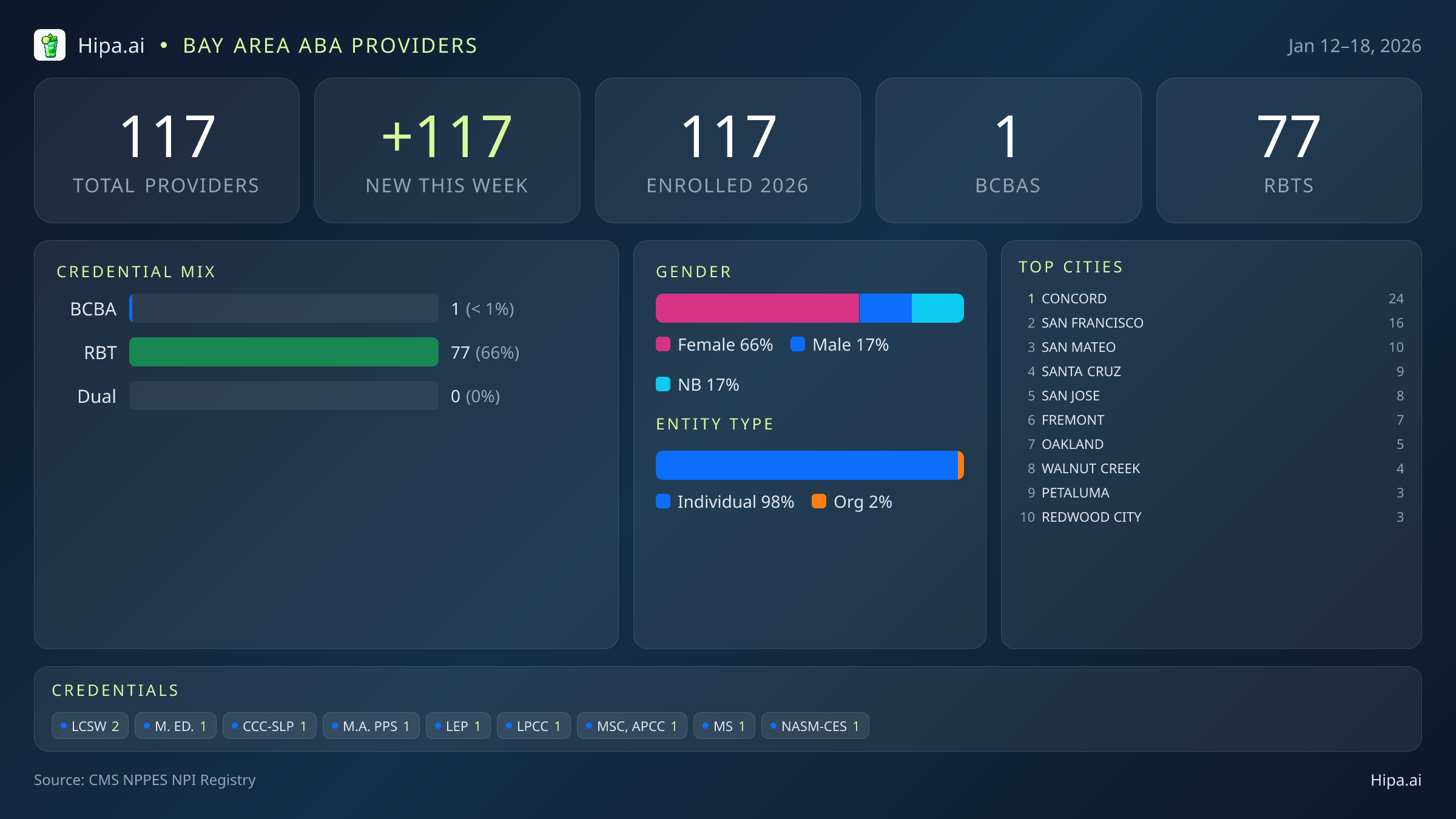
The Bay Area's behavioral health sector saw 117 providers added in the latest CMS NPI registry update, accounting for 2% of the national weekly total. This significant influx of new registrations underscores the region's active and growing behavioral health landscape. Of these, 115 individuals are practitioners and 2 are organizations, reflecting a diverse mix of practice structures entering the market.
ABA Workforce Composition
Focusing on Applied Behavior Analysis, the data reveals a notable imbalance in credentialing. There is 1 organization registered with a BCBA taxonomy, alongside 77 individual RBTs. This ratio suggests a potential challenge in supervision capacity, as BCBAs are essential for overseeing RBT services. No providers held dual BCBA and RBT credentials in this update. Beyond ABA, other credentials observed include 2 LCSWs, 1 M. ED., and 1 CCC-SLP, indicating a broader range of therapeutic services.
Demographics and Geographic Distribution
The individual workforce in the Bay Area is predominantly female, with 76 female providers representing 66% of the total. Male providers account for 19% (19 individuals), and nonbinary providers make up 17% (20 individuals). Geographically, Concord leads with 24 providers, followed by San Francisco with 16, San Mateo with 10, Santa Cruz with 9, and San Jose with 8. This concentration of RBTs with limited BCBA-level entities suggests a high demand for direct care services, but also highlights the critical need for more supervising BCBAs to ensure robust clinical oversight and expand access to comprehensive ABA therapy in the Bay Area.