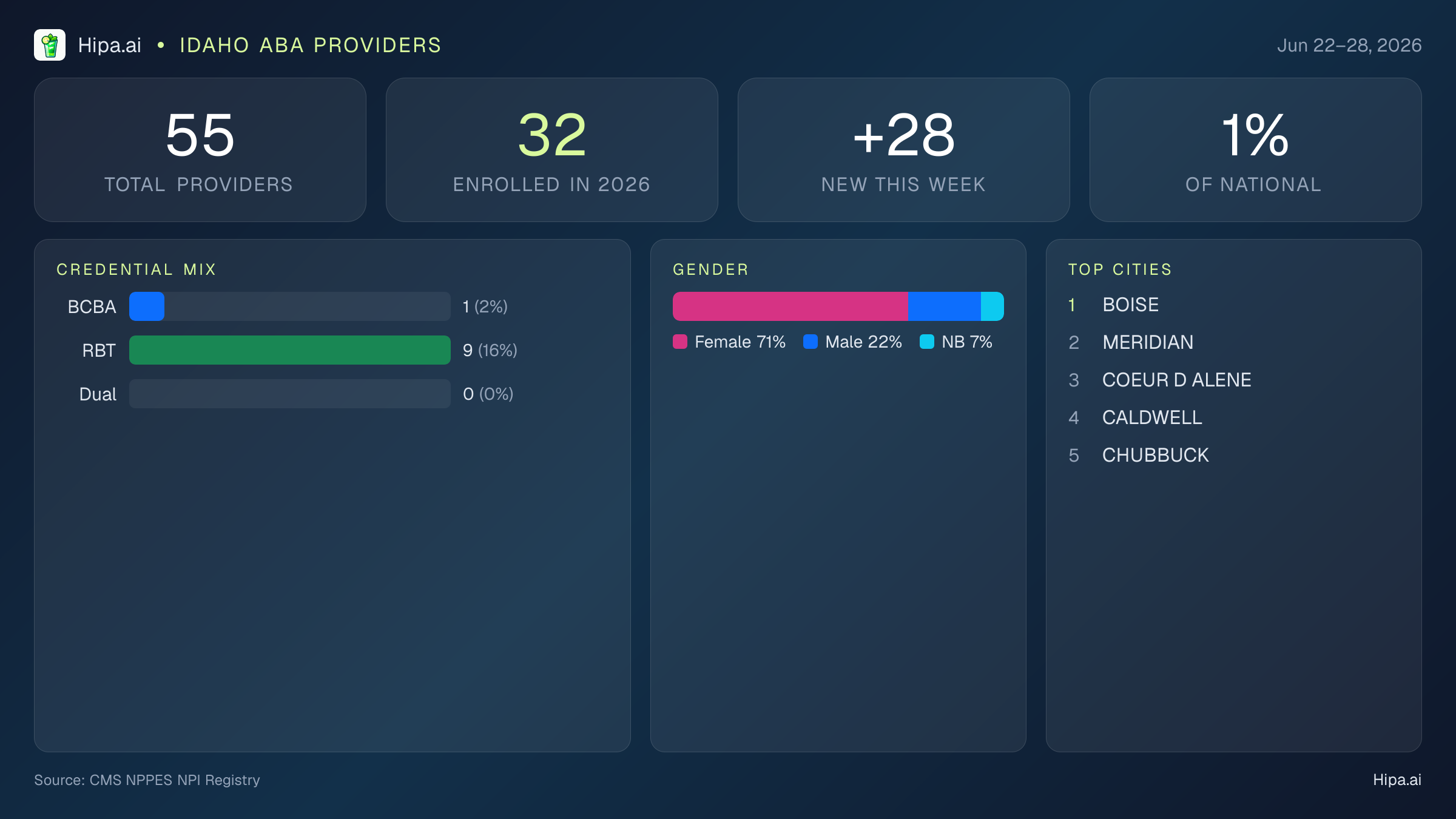
Idaho saw 55 behavioral health providers added in the latest CMS NPI registry weekly update, representing 1% of the national total. This modest contribution reflects Idaho's smaller population size, but still signifies ongoing growth in its behavioral health workforce.
ABA Workforce Landscape
The data reveals a critical imbalance within the applied behavior analysis (ABA) workforce, with only 1 BCBA credential reported alongside 9 RBT credentials. There were no individuals holding both BCBA and RBT credentials in this update. This low number of BCBAs, who are responsible for supervising RBTs and designing treatment plans, suggests a significant bottleneck for expanding ABA services in the state. The high ratio of RBTs to BCBAs indicates a potential shortage of supervisory capacity, which is crucial for maintaining quality and ethical standards in ABA therapy delivery.
Provider Demographics
Among the 45 individual providers, 32 (71%) are female, 10 (22%) are male, and 3 (7%) identify as nonbinary. This gender distribution aligns with broader trends observed in the behavioral health sector. No specific organizations appeared multiple times in this update, indicating a diverse range of smaller practices or individual practitioners rather than dominant multi-state employers.
This data suggests that while Idaho is seeing an increase in direct care providers like RBTs, the limited number of BCBAs could impede the state's ability to significantly expand access to supervised ABA services.