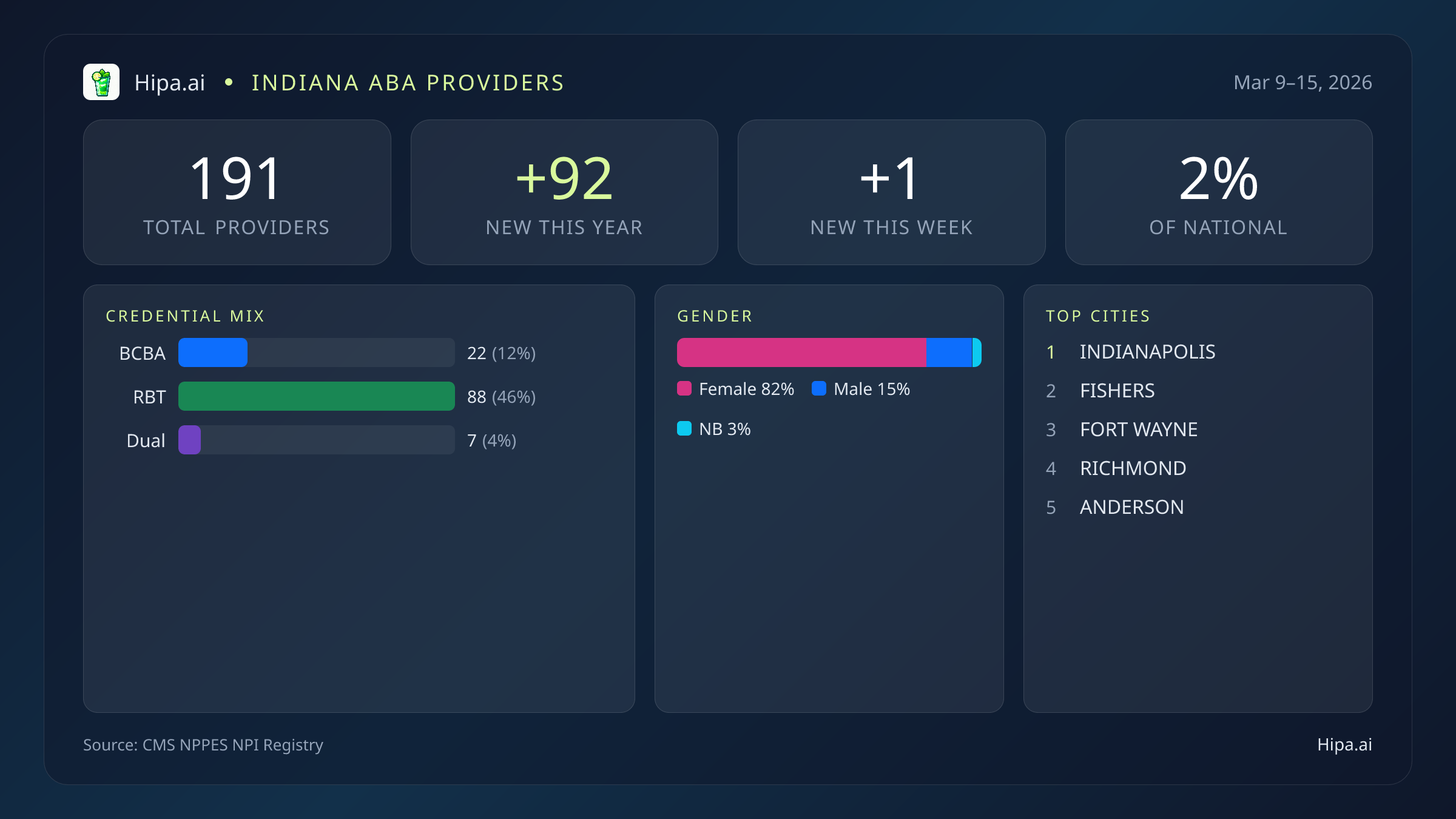
Indiana's behavioral health sector saw a total of 191 providers in the latest CMS NPI registry weekly update, representing 2% of the national weekly total. This steady activity includes 1 new provider added this week, contributing to 92 new providers so far this year. The workforce is primarily composed of 176 individual providers, with 15 organizations also present, indicating a landscape driven by individual practitioners.
Credential Mix and Supervision Capacity
Among Indiana's individual behavioral health providers, the data shows 22 professionals holding BCBA credentials and 88 individuals with RBT credentials. It is important to note that 7 providers possess both BCBA and RBT certifications, meaning these individuals are counted within both credential categories and are well-positioned for both supervision and direct service delivery. This results in a ratio of approximately 4 RBTs for every BCBA, which indicates a robust foundation for supervision capacity within the state's ABA service delivery model, crucial for maintaining service quality and RBT development. Beyond ABA-specific roles, other significant credentials include 28 LCSWs and 10 LMHCs, highlighting a broader scope of mental health support available.
Workforce Demographics and Diversity
The demographic breakdown of individual providers reveals a predominantly female workforce, with 144 female providers making up 82% of the total. Male providers account for 26 individuals, or 15%, while 6 providers identify as nonbinary, representing 3%. The data for this reporting period did not highlight any specific organizations appearing multiple times, suggesting a diverse and potentially fragmented organizational landscape rather than dominance by a few large entities. Additionally, 31 providers hold multiple taxonomies, indicating a breadth of skills and varied service offerings within Indiana's behavioral health community.
Overall, this data points to a growing and well-supervised ABA workforce in Indiana, characterized by a favorable RBT to BCBA ratio and a strong female representation, which are positive indicators for continued access to quality behavioral health services across the state.