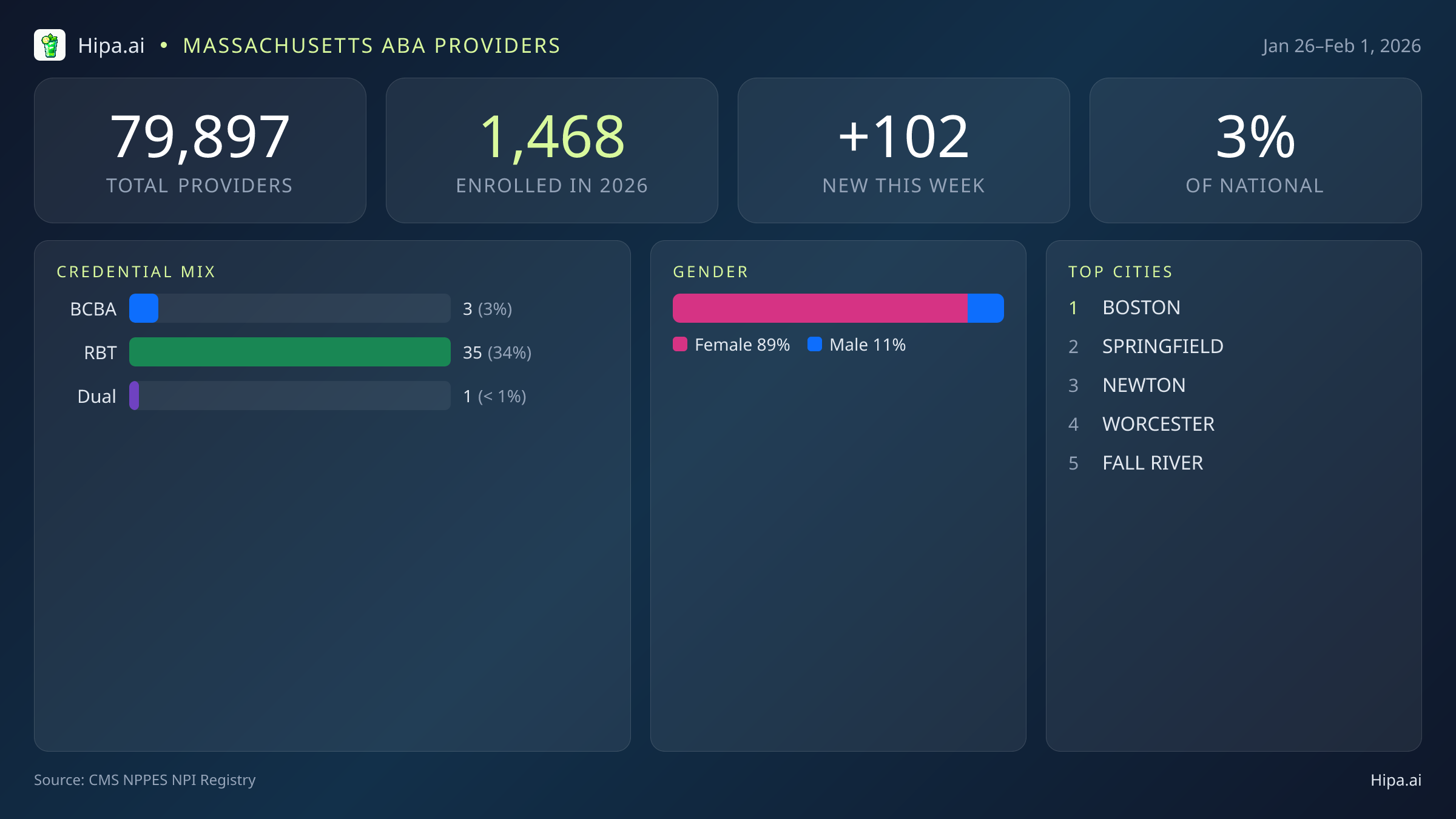
Massachusetts saw the addition of 102 behavioral health providers in the latest CMS NPI registry update, accounting for 2% of the national weekly total. This consistent volume of new enrollments signals a healthy, albeit modest, expansion in the state's behavioral health workforce, reflecting ongoing demand for services across the Commonwealth.
ABA Workforce Composition
Within the applied behavior analysis sector, the update includes 3 BCBAs and 35 RBTs. It's important to note that credential counts can overlap, as evidenced by 1 individual holding both BCBA and RBT credentials. The significant ratio of RBTs to BCBAs, at over 11:1, indicates a robust pipeline of direct service providers. However, this also underscores the critical importance of maintaining adequate BCBA supervision capacity to ensure quality service delivery and support the career progression of RBTs, especially given Massachusetts's state-level LBA licensing requirements for independent practice.
Provider Demographics
Among the 90 individual providers newly enrolled, the workforce demonstrates a strong female majority, with 80 women comprising 89% of individual enrollees. Male providers accounted for 10 individuals, or 11%. No specific organizations appeared multiple times in this week's data, suggesting a broad distribution of new organizational entities rather than a concentration in a few large chains. The top cities for new providers included Boston, Springfield, Newton, Worcester, and Fall River, indicating widespread growth.
Overall, this data suggests a steady increase in direct ABA service capacity across Massachusetts, but continued monitoring of the BCBA-to-RBT ratio will be essential for sustainable growth and access to high-quality care.