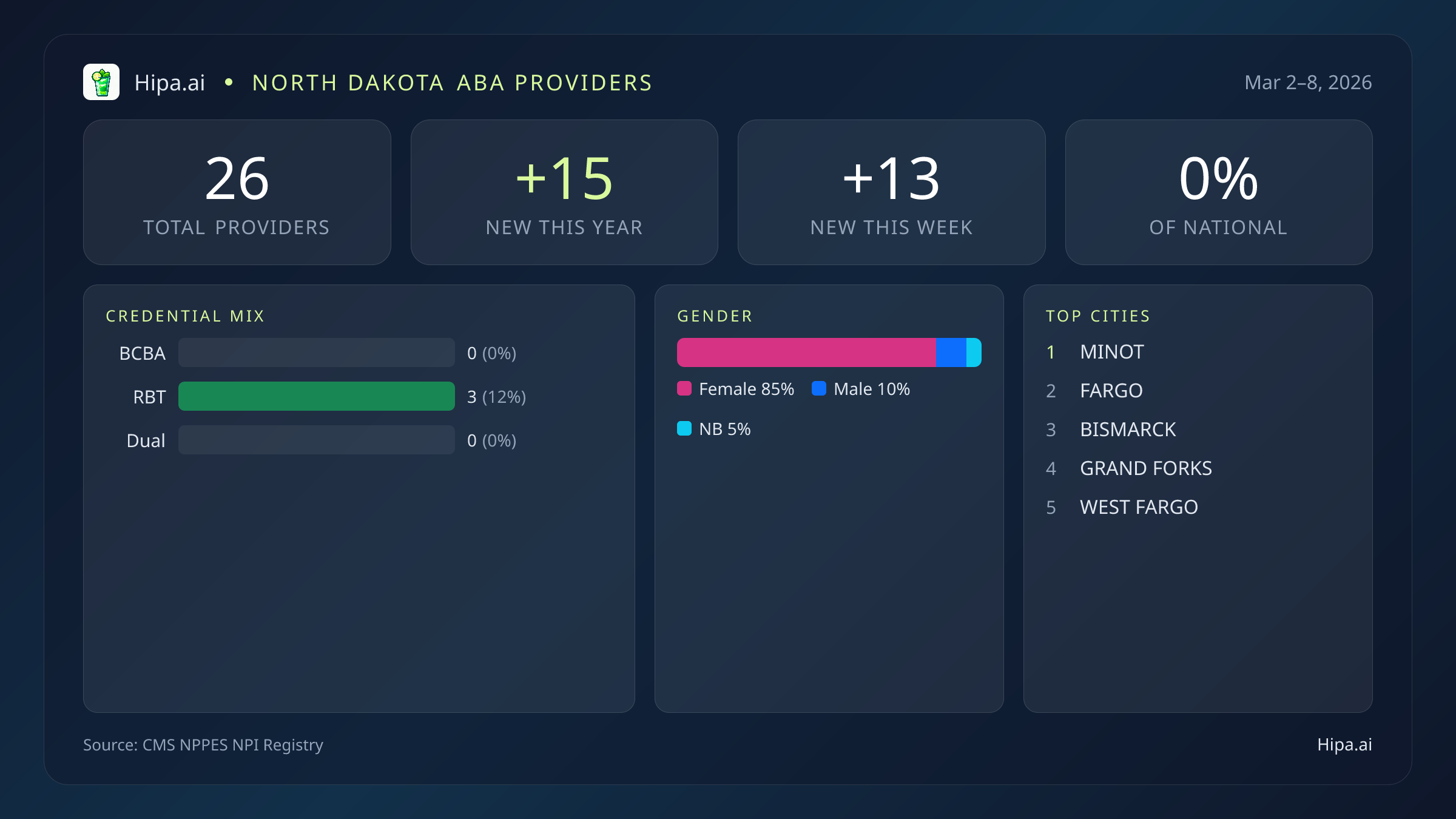
North Dakota added 26 total behavioral health providers to the CMS NPI registry this week, contributing 0% to the national total. This minimal contribution suggests a localized and relatively small behavioral health workforce within the state. Of these, 20 individuals and 6 organizations were identified. The state has seen 15 new providers added this year, with 1 new provider joining this week alone.
Credential Mix and Supervision Capacity
The credential breakdown for North Dakota reveals a significant gap in ABA-specific roles. The state reported 3 Registered Behavior Technicians (RBTs), but 0 Board Certified Behavior Analysts (BCBAs). This absence of BCBAs is critical, as RBTs require supervision from BCBAs to provide ABA services. Without this supervisory capacity, the availability of direct ABA therapy for individuals in North Dakota is severely limited. Additionally, 9 providers hold multiple taxonomies, indicating some professionals offer diverse services beyond a single specialty. Other behavioral health credentials identified include 2 Licensed Clinical Social Workers (LCSW), 1 Doctor of Education (EDD), 1 Licensed Master Addiction Counselor/Licensed Professional Counselor (LMAC/LPC), and 2 Licensed Addiction Counselors (LAC), indicating a broader behavioral health landscape.
Workforce Demographics
The individual provider workforce in North Dakota is predominantly female, with 17 female providers, representing 85% of the individual registrants. There are 2 male providers (10%) and 1 nonbinary provider (5%). The data did not identify any dominant multi-state organizations among the new registrants this week. The top cities for provider activity include Minot, Fargo, Bismarck, Grand Forks, and West Fargo.
The current data suggests that ABA access in North Dakota remains highly constrained, primarily due to the critical shortage of BCBAs needed to supervise RBTs and deliver comprehensive ABA services.