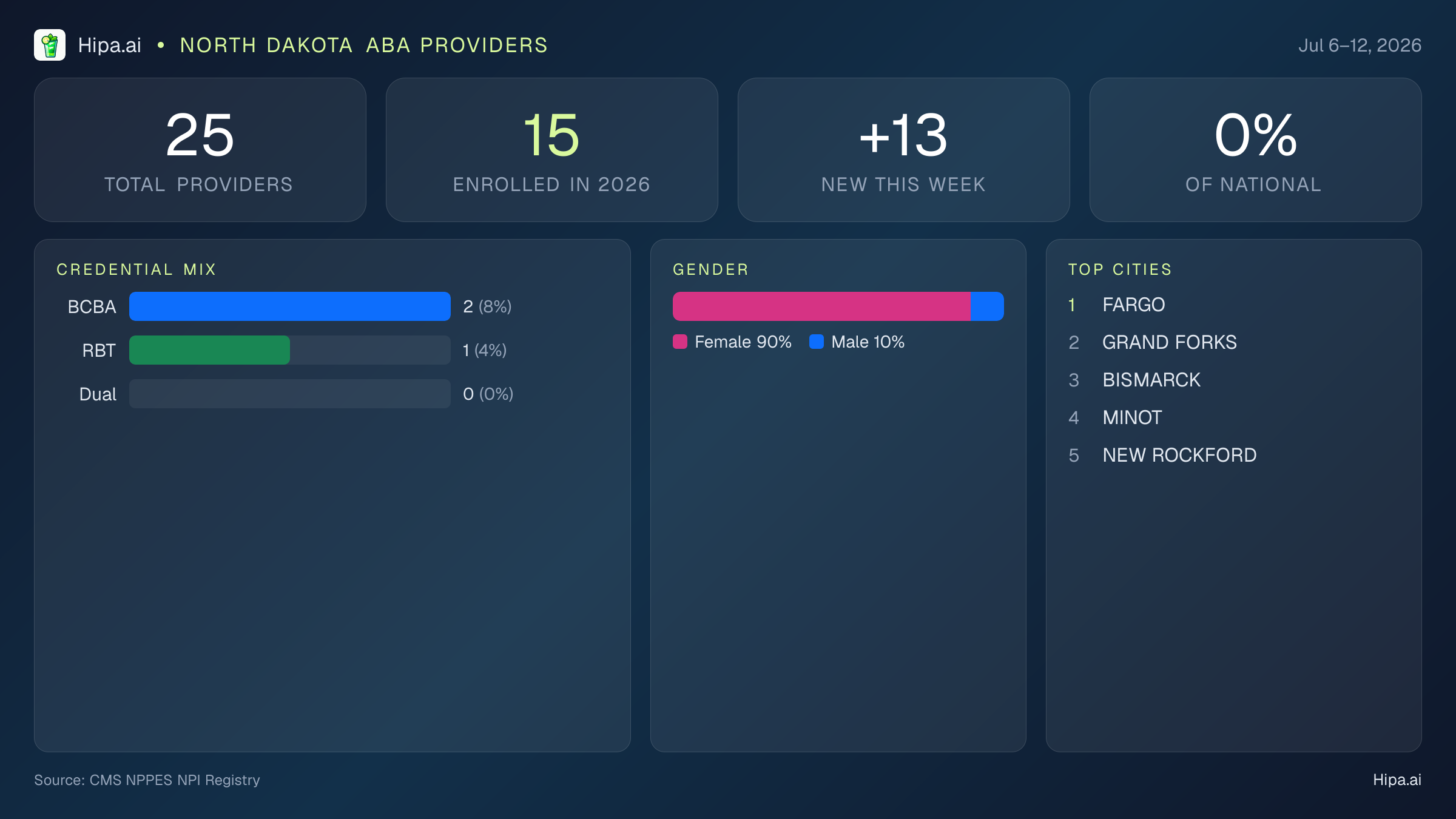
North Dakota's behavioral health sector saw 13 new providers added this week, bringing its total to 25 providers in the latest CMS NPI registry update. While this represents 0% of the national weekly total, it signals a modest but consistent growth in a state with a smaller overall workforce, where each addition can significantly impact local access to care.
ABA Workforce Composition
Within the applied behavior analysis (ABA) sector, the data shows 2 BCBA and 1 RBT credentials. It's important to note that one of the BCBA credentials is also listed as 'BCBA, LBA,' indicating a state-level Licensed Behavior Analyst qualification, which is a common requirement for practice. There were no individuals holding both BCBA and RBT credentials. The low number of RBTs relative to BCBAs suggests a limited direct service workforce, potentially impacting the scalability of ABA therapy delivery across the state. This ratio highlights the need for continued RBT recruitment and training to support BCBA supervisors.
Provider Demographics and Organizational Presence
Of the 21 individual providers, the workforce is predominantly female, with 19 (90%) identifying as female and 2 (10%) as male, aligning with typical gender distributions observed in the behavioral health field. No specific organizations appeared multiple times in this week's data, suggesting a landscape of smaller, independent practices or new entries rather than dominant multi-state chains. The most active cities for new providers include Fargo, Grand Forks, and Bismarck.
Overall, this data suggests a nascent but growing behavioral health workforce in North Dakota, where strategic recruitment and development of both BCBAs and RBTs will be crucial to enhance ABA service access and meet the state's behavioral health needs.