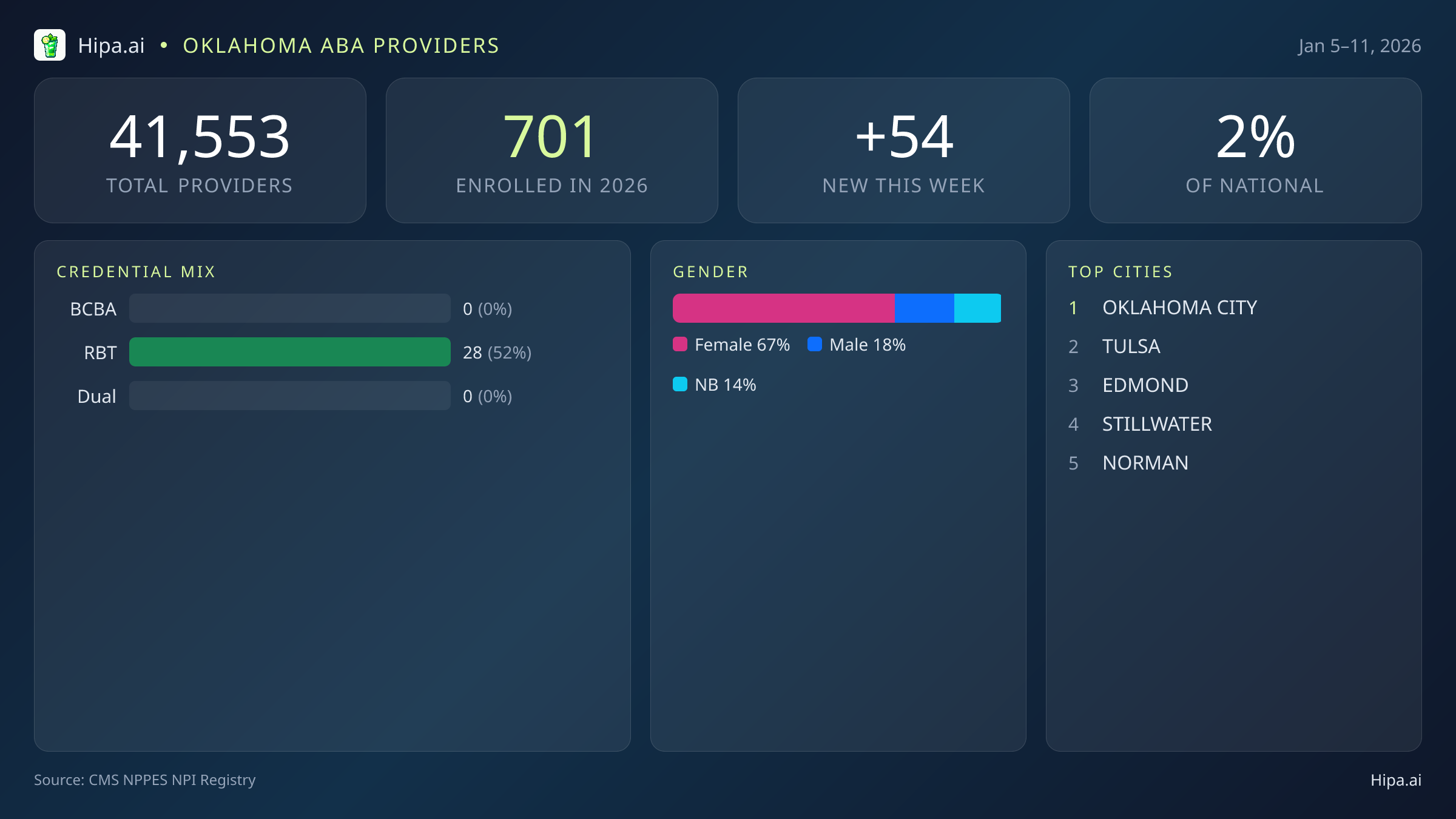
Oklahoma added 54 behavioral health providers in the latest weekly CMS update, accounting for 1% of the national total. All of these providers are new to the registry this year, signaling a fresh influx into the state's behavioral health workforce, primarily concentrated in cities like Oklahoma City, Tulsa, and Edmond.
ABA Workforce Composition
Within the applied behavior analysis field, the data shows 28 new Registered Behavior Technicians (RBTs) among the 49 individual providers. Crucially, there are no new Board Certified Behavior Analysts (BCBAs) or individuals holding dual BCBA+RBT credentials reported this week. This significant imbalance, with a substantial number of RBTs entering the workforce but no new BCBAs to provide supervision, points to a potential bottleneck in clinical oversight. The growth of the RBT workforce is vital for direct service delivery, but without a proportional increase in BCBAs, existing supervisors will face increased caseloads, or new RBTs may struggle to find employment requiring BCBA supervision.
Provider Demographics and Trends
The individual provider cohort is predominantly female, with women accounting for 67% (33 providers). Male providers represent 18% (9 individuals), and 14% (7 providers) identify as nonbinary. The data did not identify any organizations appearing multiple times in this week's update, suggesting a diverse entry of smaller practices or individual practitioners rather than expansion from dominant multi-state chains. The presence of other credentialed professionals, such as Mental Health Counselors and Speech-Language Pathologists, indicates a broader behavioral health expansion beyond ABA.
The strong growth in RBTs without a corresponding increase in BCBAs highlights a critical need for more supervisory-level professionals to support the expanding ABA workforce and ensure quality service delivery across Oklahoma.