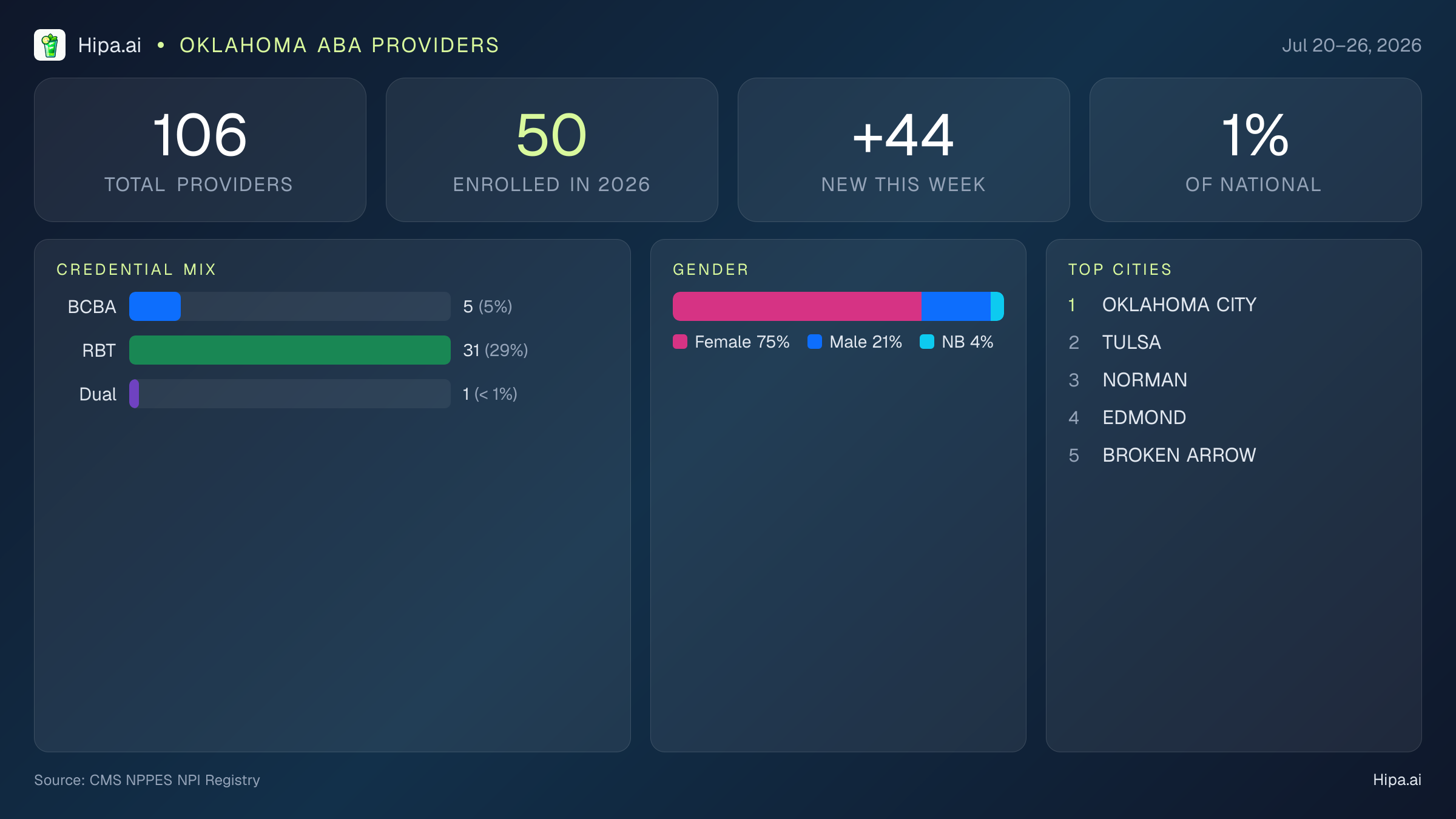
Oklahoma recorded 106 behavioral health providers in the latest CMS NPI registry weekly update, representing 1% of the national total. Of these, 44 were new this week. This modest share suggests a steady, but not explosively rapid, growth in the state's behavioral health workforce, with a notable number of new enrollments contributing to its expansion.
ABA Workforce Dynamics
Within the Applied Behavior Analysis (ABA) sector, the data shows 5 providers with BCBA credentials or taxonomy and 31 providers with RBT credentials or taxonomy. It's important to note that these counts may include individuals or organizations that appear in both credential and taxonomy categories. One individual held both BCBA and RBT credentials. The ratio of RBTs to BCBAs, approximately 6:1, indicates a robust base of direct service providers but also highlights a potential need for more supervising BCBAs to ensure adequate oversight for quality ABA therapy across the state.
Provider Demographics
Of the 96 individual providers, the workforce is predominantly female, with 72 individuals (75%) identifying as female, 20 (21%) as male, and 4 (4%) as nonbinary. This gender distribution aligns with national trends in behavioral health. The top cities for provider activity were Oklahoma City, Tulsa, Norman, Edmond, and Broken Arrow, indicating a concentration of services in urban and suburban areas. No specific large organizations appeared multiple times in this week's data, suggesting a diverse employer landscape rather than dominance by a few large chains in this particular update.
This data suggests that while Oklahoma's behavioral health workforce is growing and diverse, continued focus on increasing BCBA capacity will be crucial for expanding access to ABA services, particularly in areas beyond the major metropolitan centers.