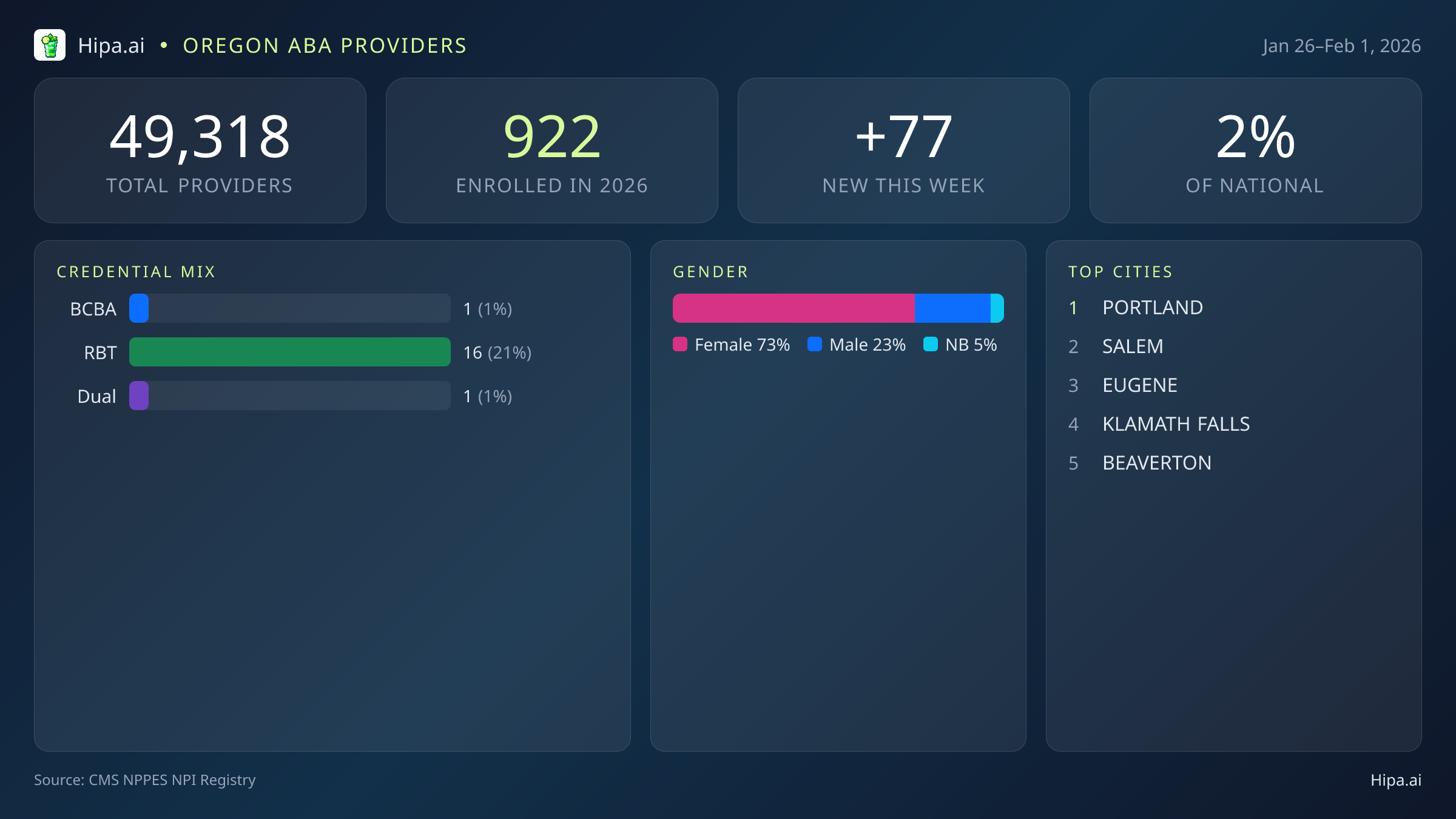
Oregon added 77 behavioral health providers in the latest weekly CMS update, accounting for 2% of the national total. This consistent, albeit modest, share suggests a steady expansion of the state's behavioral health sector. Of these, 62 were individual practitioners and 15 were organizations, indicating a mix of independent growth and new clinic formations.
ABA Workforce Composition
Within the applied behavior analysis field, the update includes 16 Registered Behavior Technicians (RBTs) and 1 Board Certified Behavior Analyst (BCBA). These credential counts can overlap with broader taxonomies, and the data also identifies 1 individual holding both BCBA and RBT credentials, a common marker of career progression from technician to supervisor. The 16-to-1 ratio of RBTs to BCBAs highlights a strong base for direct service delivery, but also underscores the critical need for more BCBA-level supervisors to meet the growing demand for ABA services.
Provider Demographics
Among the 62 individual providers, the workforce is predominantly female, with 45 women making up 73%. Male providers account for 14 individuals (23%), and 3 individuals (5%) identify as nonbinary. No specific organizations were noted as appearing multiple times in this week's data, suggesting a broad distribution of new organizational entries rather than expansion from a few dominant players.
The continued influx of RBTs, in particular, points to a growing capacity for direct ABA service delivery across Oregon, though sustained growth in BCBA supervision remains key for expanding access.