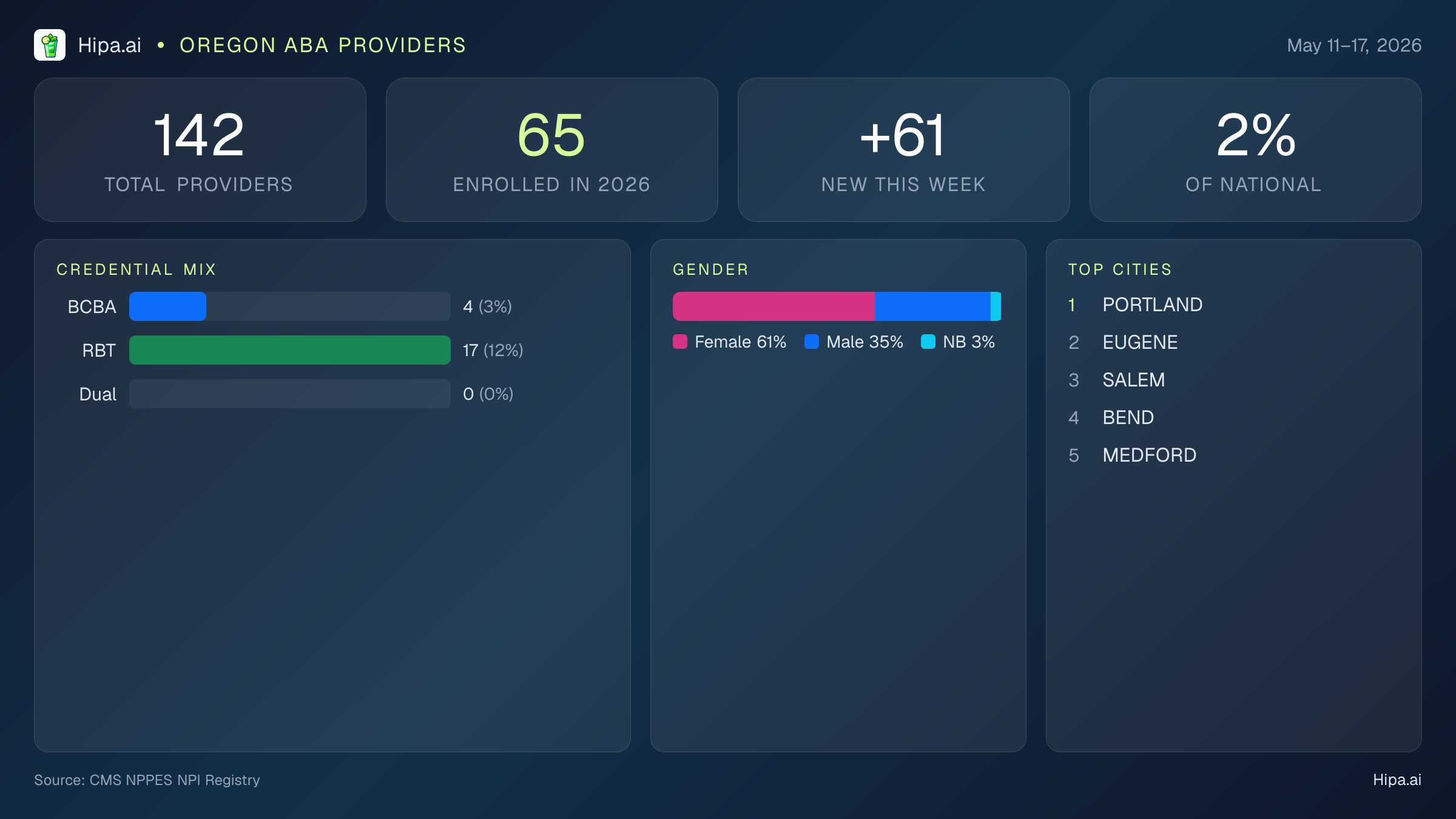
Oregon added 142 behavioral health providers in the latest weekly CMS NPI registry update, contributing 2% to the national total. While a smaller share compared to more populous states, this consistent addition of new professionals signals ongoing growth in Oregon's local behavioral health workforce, addressing the state's specific needs for expanded access to care.
ABA Workforce Composition
Within the applied behavior analysis sector, the data shows 4 providers with BCBA credentials and 17 providers with RBT credentials. It is important to note that these are distinct certifications, and for this reporting period, no individuals held both BCBA and RBT credentials. The resulting ratio of approximately 4.25 RBTs per BCBA is generally considered a healthy balance for direct service delivery and effective supervision, indicating a robust support structure for new RBTs entering the field. This ratio is crucial for ensuring quality care and expanding ABA service capacity.
Provider Demographics
Of the 127 individual providers registered, 78 (61%) are female, 45 (35%) are male, and 4 (3%) identify as nonbinary. Unlike some larger states, no specific organizations appeared multiple times in this week's new registrations, suggesting a more dispersed pattern of individual practice growth rather than large-scale hiring by multi-state chains.
This steady influx of new behavioral health professionals, combined with a favorable RBT-to-BCBA ratio, suggests a positive trajectory for enhancing access to critical ABA services and broader mental health support across Oregon. Continued monitoring of these trends will be vital for understanding long-term workforce development and service availability in the state.