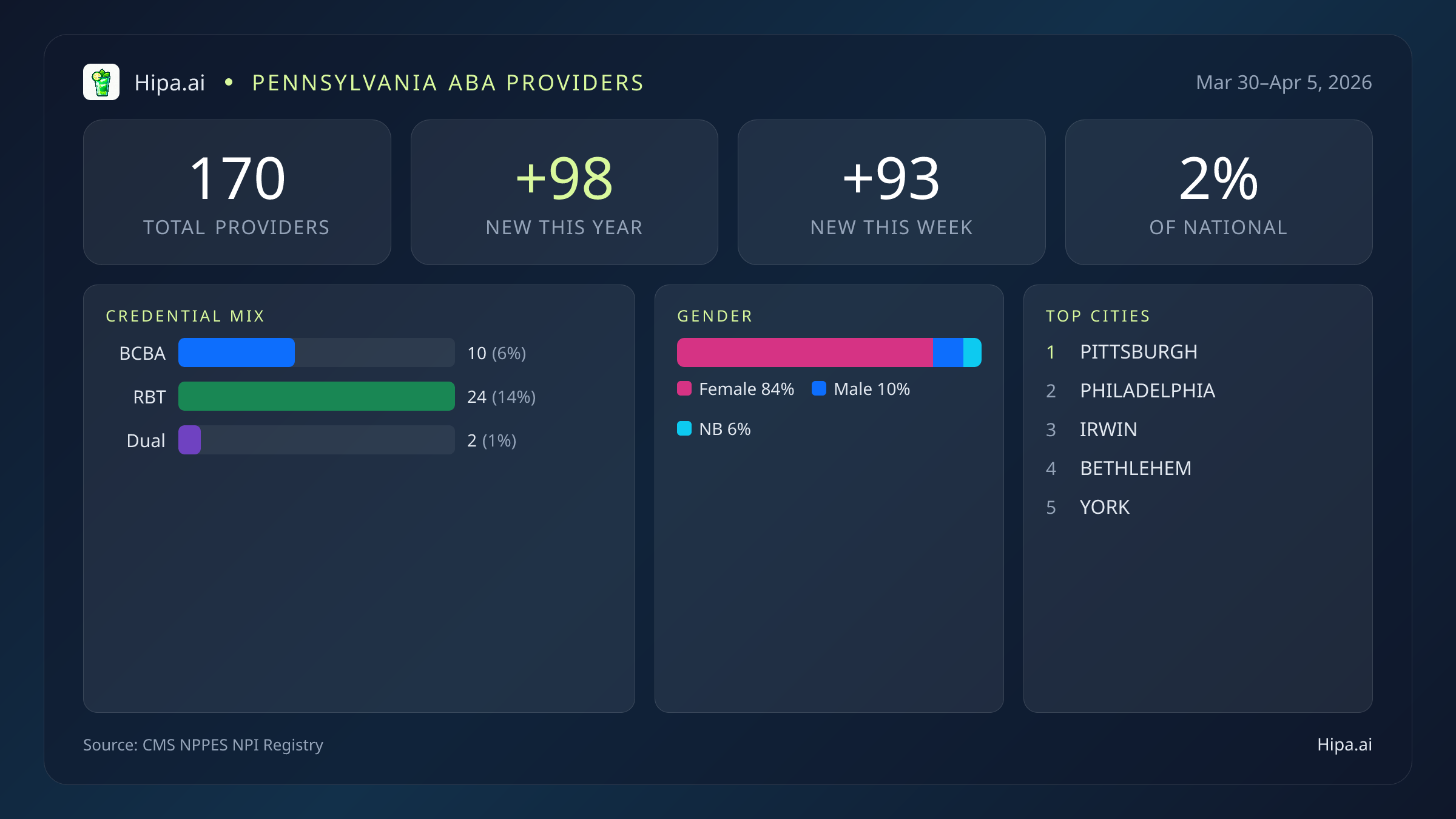
Pennsylvania recorded activity from 170 providers in the latest CMS NPI registry weekly update, representing 2% of the national total. This consistent, albeit modest, inflow signals ongoing development within the state's behavioral health sector. The majority of these new entries were individual practitioners, totaling 139 individuals, alongside 31 organizations.
Credential Mix and Supervision Capacity
Within the individual provider data, there were 10 BCBAs and 24 RBTs. It is important to note that these categories are not mutually exclusive, as 2 individuals hold both BCBA and RBT credentials. This dual credentialing reflects a pathway for career progression and a valuable asset for clinics, as these individuals can both provide direct services and potentially contribute to supervision. The ratio of RBTs to BCBAs, approximately 2.4 to 1, indicates a strong reliance on RBTs for direct ABA service delivery, underscoring the critical need for a sufficient number of BCBAs to ensure adequate supervision capacity across the state.
Workforce Demographics
The individual provider workforce in Pennsylvania shows a clear gender distribution: 117 female providers, accounting for 84% of individuals, with 14 male providers representing 10%. Additionally, 8 providers identified as nonbinary, making up 6%. No specific organizations appeared multiple times in this week's data, suggesting a diverse landscape of smaller entities or individual practices. Furthermore, 31 providers reported holding multiple taxonomies, indicating a broad scope of practice or specialized skill sets within the behavioral health community.
This data suggests a growing, predominantly female behavioral health workforce in Pennsylvania, with continued expansion of the RBT base necessitating a corresponding increase in BCBA supervisors to maintain quality and access to ABA services.