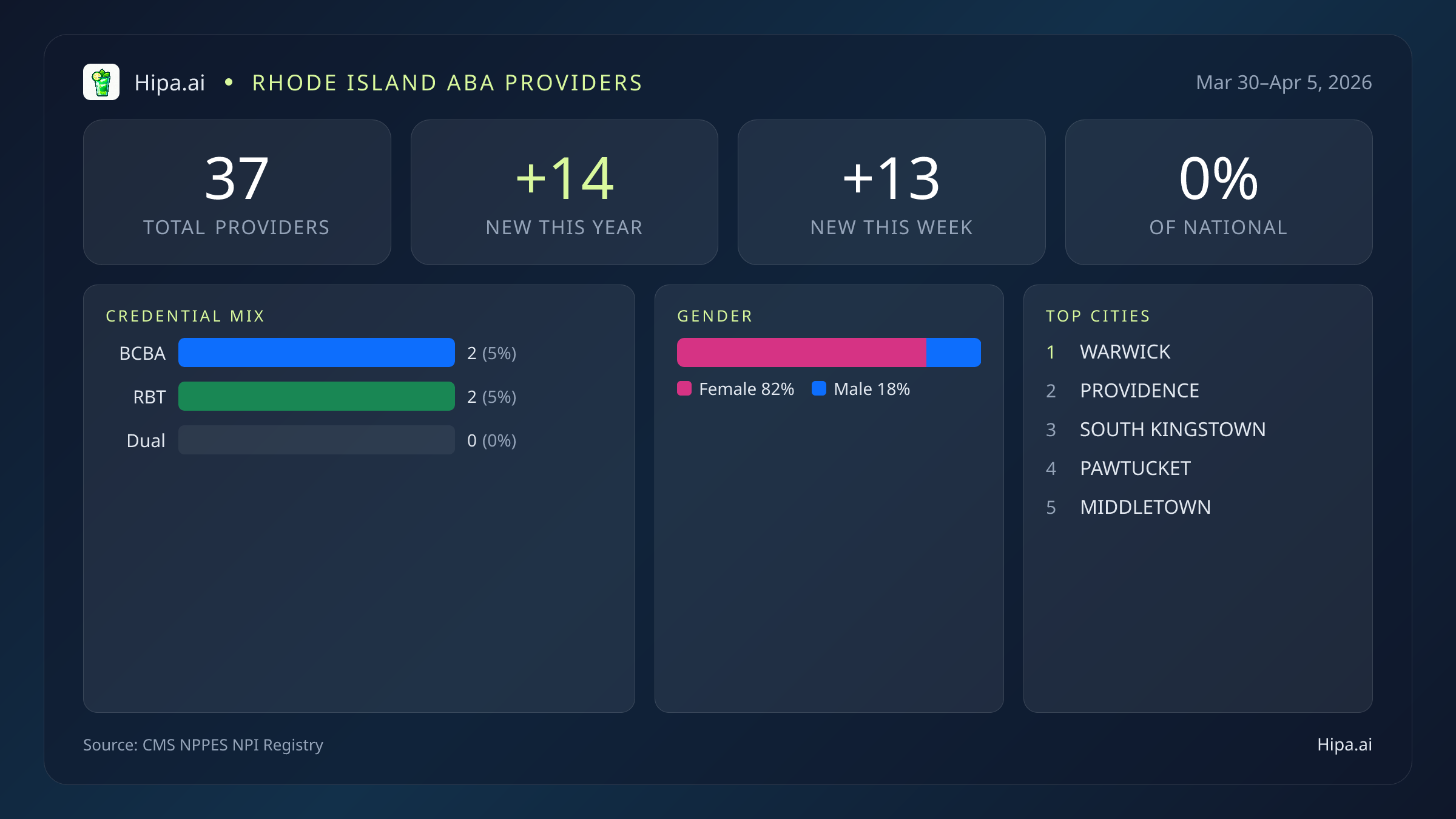
Rhode Island’s behavioral health sector saw 37 total providers in the latest CMS NPI registry weekly update. While this number represents 0% of the national weekly total, reflecting the state's smaller geographic footprint, it's notable that 13 providers were newly added this week. This recent surge accounts for nearly all new providers in the state this year, with 14 new providers appearing since January 1st. The new additions comprise 28 individuals and 9 organizations, contributing to the state's expanding behavioral health infrastructure.
Credentialing and Supervision Capacity
Among the newly updated credentials, the ABA workforce shows 2 professionals with BCBA credentials and 2 individuals with RBT credentials. The absence of dual BCBA+RBT credentials among these new entries means these specific RBTs would require supervision from other existing BCBAs in the state, or the BCBAs are supervising an existing RBT workforce. This 1:1 ratio within this specific dataset highlights the ongoing need for a robust supervisory structure to support direct service providers. Beyond ABA, the data indicates a strong presence of other mental health professionals, including 7 LICSWs and 3 LMHCs, alongside 2 LCSWs, signaling broad-based behavioral health support in Rhode Island.
Workforce Demographics and Organizational Footprint
The individual provider demographic leans heavily female, with 23 female providers accounting for 82% of the total, while 5 male providers represent 18%. This gender distribution is consistent with broader trends in the behavioral health field. In terms of organizational presence, "SEVEN HILLS RHODE ISLAND INC" appeared 2 times, suggesting a multi-site operation or significant activity from this entity within the state. Additionally, 5 providers hold multiple taxonomies, indicating a diverse skill set and the potential for integrated care approaches.
This data suggests a modest but recently active period for Rhode Island’s behavioral health workforce, with a clear need for continued growth in BCBA numbers to ensure adequate supervision for RBTs and expand access to ABA services across the state.