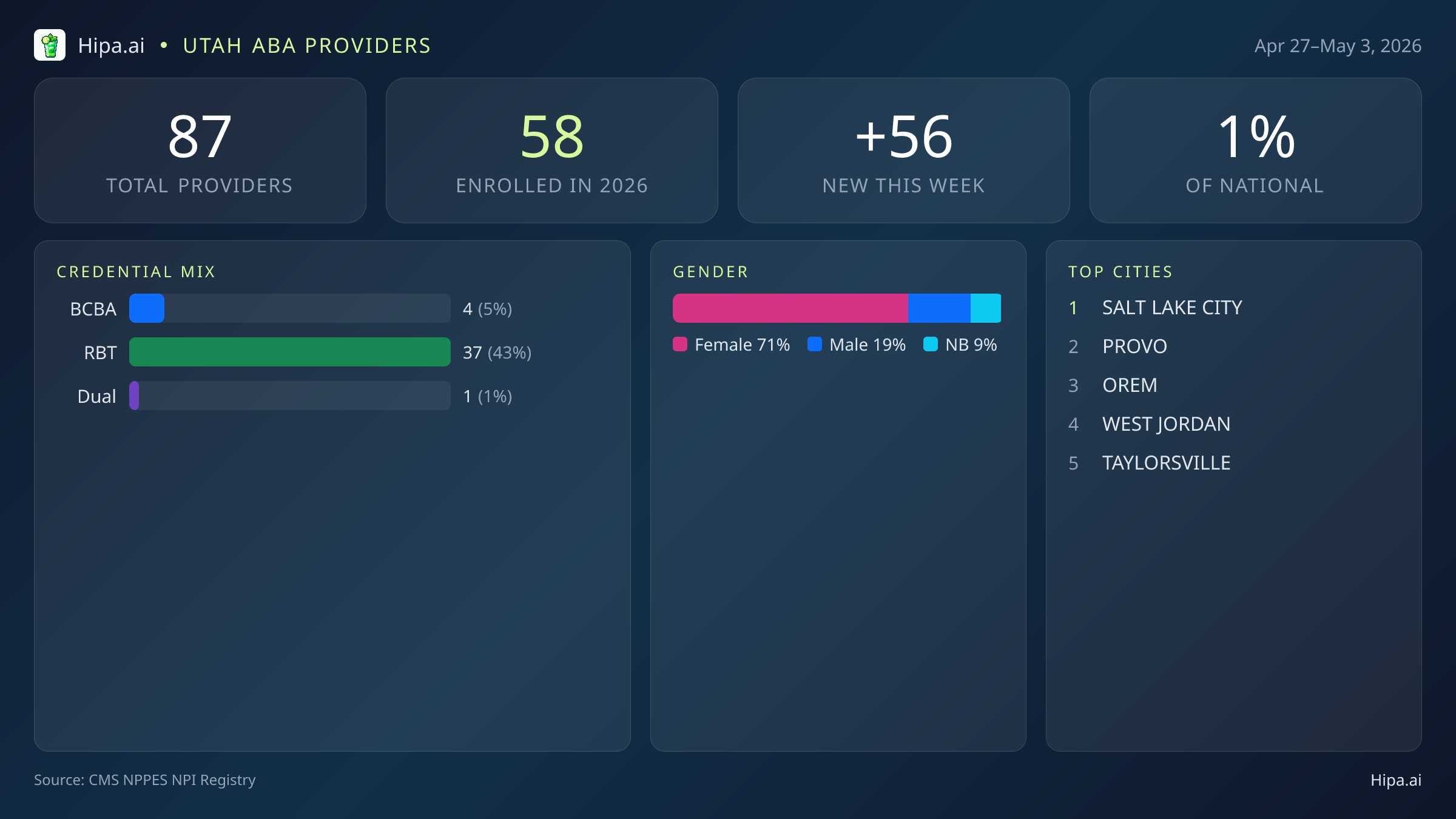
Utah saw the addition of 87 behavioral health providers in the latest weekly CMS NPI registry update, representing 1% of the national total. This modest share indicates a steady, localized growth in the state's behavioral health workforce, contributing to the overall capacity for care.
ABA Workforce Composition
Within the applied behavior analysis sector, the data reveals 4 BCBAs and 37 RBTs. It is important to note that credential and taxonomy counts can overlap; for example, 1 provider holds both BCBA and RBT credentials, a common career progression. The ratio of RBTs to BCBAs, approximately 9-to-1, highlights a robust pipeline of direct service providers, but also underscores the critical need for continued growth in BCBA numbers to ensure adequate supervision capacity.
Provider Demographics
Among the 77 individual providers, the workforce is predominantly female, with 55 individuals identifying as female, accounting for 71%. Male providers total 15 individuals, making up 19%, while 7 individuals identify as nonbinary, representing 9%. No specific organizations appeared multiple times in this week's data, suggesting a diverse entry of new entities rather than expansion by a few dominant players.
The consistent influx of RBTs in Utah is crucial for expanding direct ABA service delivery and addressing access gaps across the state.