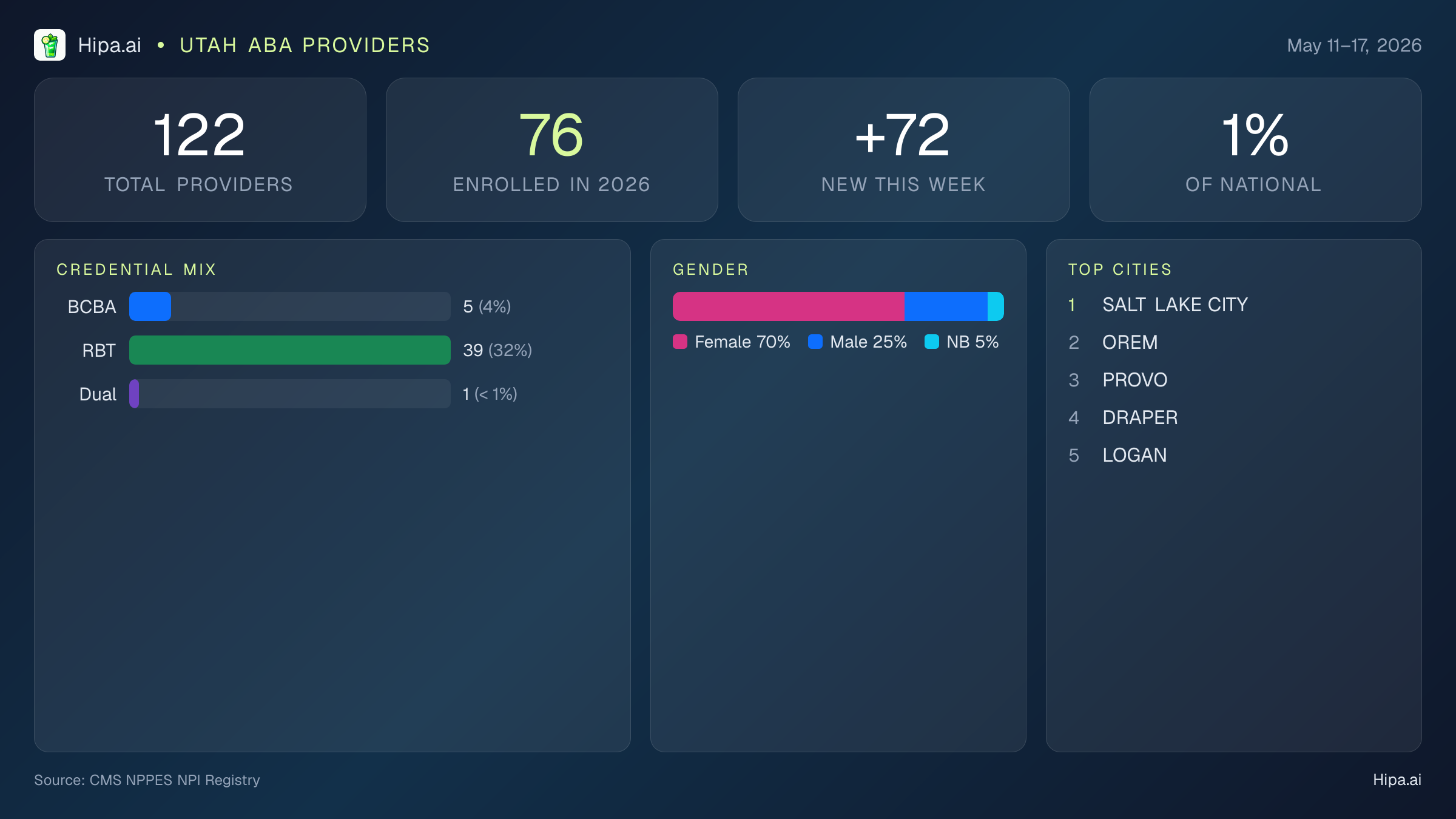
Utah saw 122 new behavioral health providers in the latest CMS NPI registry update, representing 1% of the national weekly total. This consistent influx of new providers, while a smaller percentage compared to larger states, is a meaningful indicator of ongoing growth and demand within Utah's local behavioral health sector, including the expanding field of Applied Behavior Analysis.
ABA Workforce Composition
Focusing on the ABA workforce, the data shows 5 providers with BCBA credentials and 39 with RBT credentials. It is important to note that these categories are not mutually exclusive, as 1 individual holds both BCBA and RBT credentials, often reflecting a career path from direct service to supervisory roles. The resulting approximate 7.8-to-1 ratio of RBTs to BCBAs highlights a strong foundation of direct service providers. However, this ratio also underscores the critical need for more BCBA supervisors to maintain adequate supervision levels, ensure quality care, and facilitate the expansion of ABA services across Utah.
Provider Demographics
Among the 104 individual providers, the gender breakdown reveals that 73 (70%) are female, 26 (25%) are male, and 5 (5%) identify as nonbinary. This gender distribution is largely consistent with broader trends observed in the behavioral health and ABA fields. Notably, no specific organizations appeared multiple times in this week's new registrations, suggesting a diverse landscape of smaller practices or individual practitioners joining the workforce.
This steady addition of behavioral health professionals, particularly at the RBT level, indicates Utah's ongoing efforts to enhance access to care. For the ABA industry, continued attention to increasing the BCBA workforce will be essential to support these new RBTs and ensure sustainable, high-quality service delivery.