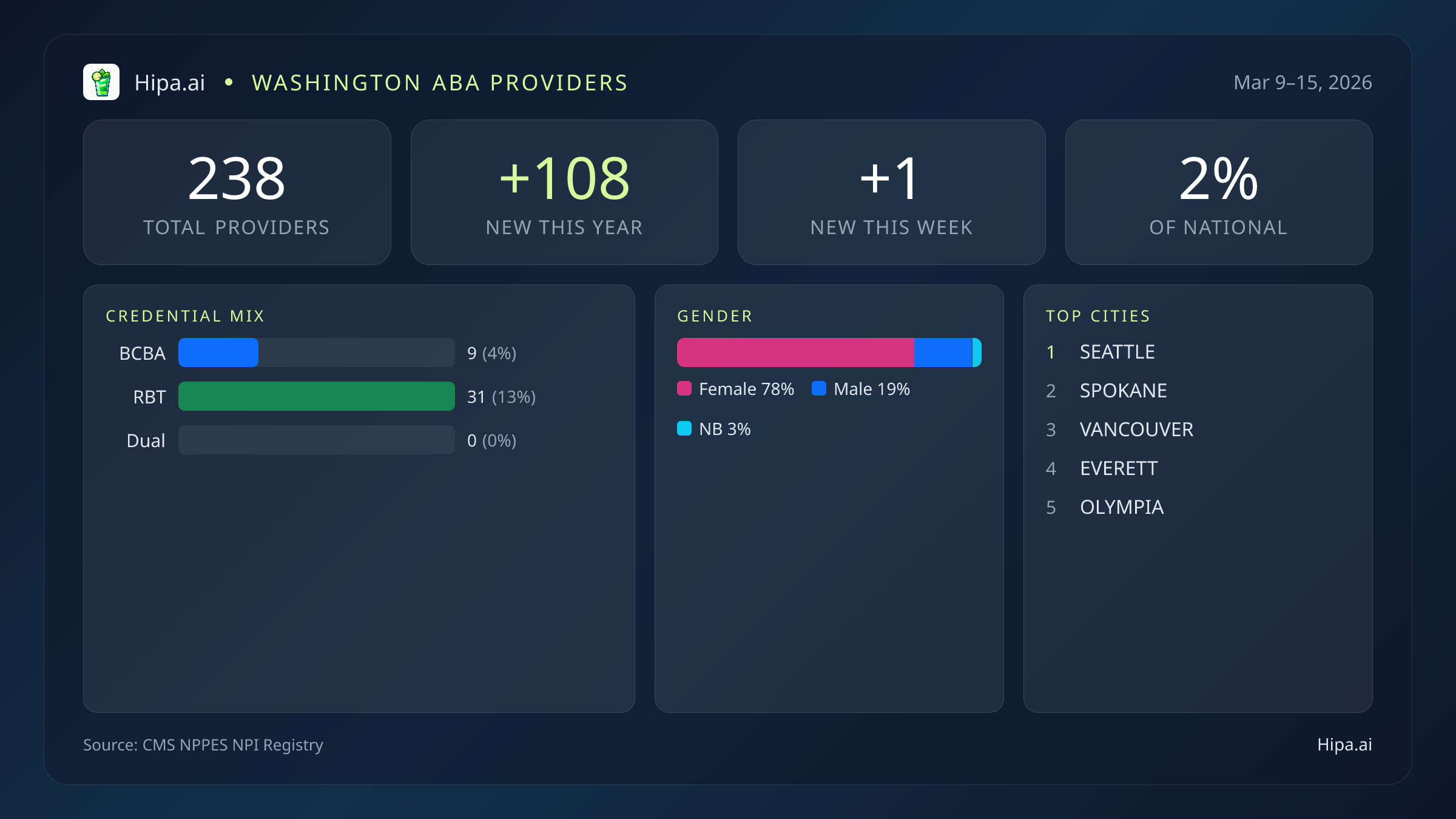
Washington's behavioral health sector saw a consistent, albeit moderate, influx of professionals in the latest CMS NPI registry weekly update. The state recorded a total of 238 providers, accounting for 2% of the national weekly total. This week added 1 new provider, contributing to a year-to-date total of 108 new providers. Of the total, 207 are individuals and 31 are organizations, indicating a landscape with a strong individual practitioner base alongside organizational entities.
Credential Mix and Supervision Capacity
Delving into the credential mix, the data shows 9 professionals holding BCBA credentials and 31 individuals with RBT credentials. Notably, there were no providers identified with dual BCBA and RBT credentials this period. The ratio of RBTs to BCBAs stands at approximately 3.44 to 1. This relatively tight ratio suggests a potentially healthier supervision capacity for direct ABA service delivery in Washington compared to states with higher RBT-to-BCBA ratios. Beyond ABA-specific credentials, the state also saw activity among other behavioral health professionals, with 11 individuals holding LMHC, 7 with LICSW, and 3 with SUDPT credentials, reflecting a diverse behavioral health workforce addressing a broad spectrum of needs.
Workforce Demographics and Diverse Practice
The demographic breakdown reveals a predominantly female workforce, with 162 female providers making up 78% of individual practitioners. Male providers number 39, representing 19%, and 6 providers identify as nonbinary, accounting for 3%. No specific multi-state ABA chains or other organizations appeared multiple times in this week's data, suggesting a less concentrated market by large employers. Top cities for provider activity include Seattle, Spokane, Vancouver, Everett, and Olympia. Furthermore, 68 providers hold multiple taxonomies, indicating a versatile workforce with diverse skill sets and broader scopes of practice contributing to comprehensive care across the state.
This data suggests that Washington is experiencing steady growth in its behavioral health workforce, characterized by a favorable BCBA-to-RBT ratio and a diverse range of credentialed professionals, which are crucial for improving access to quality ABA and other mental health services statewide.