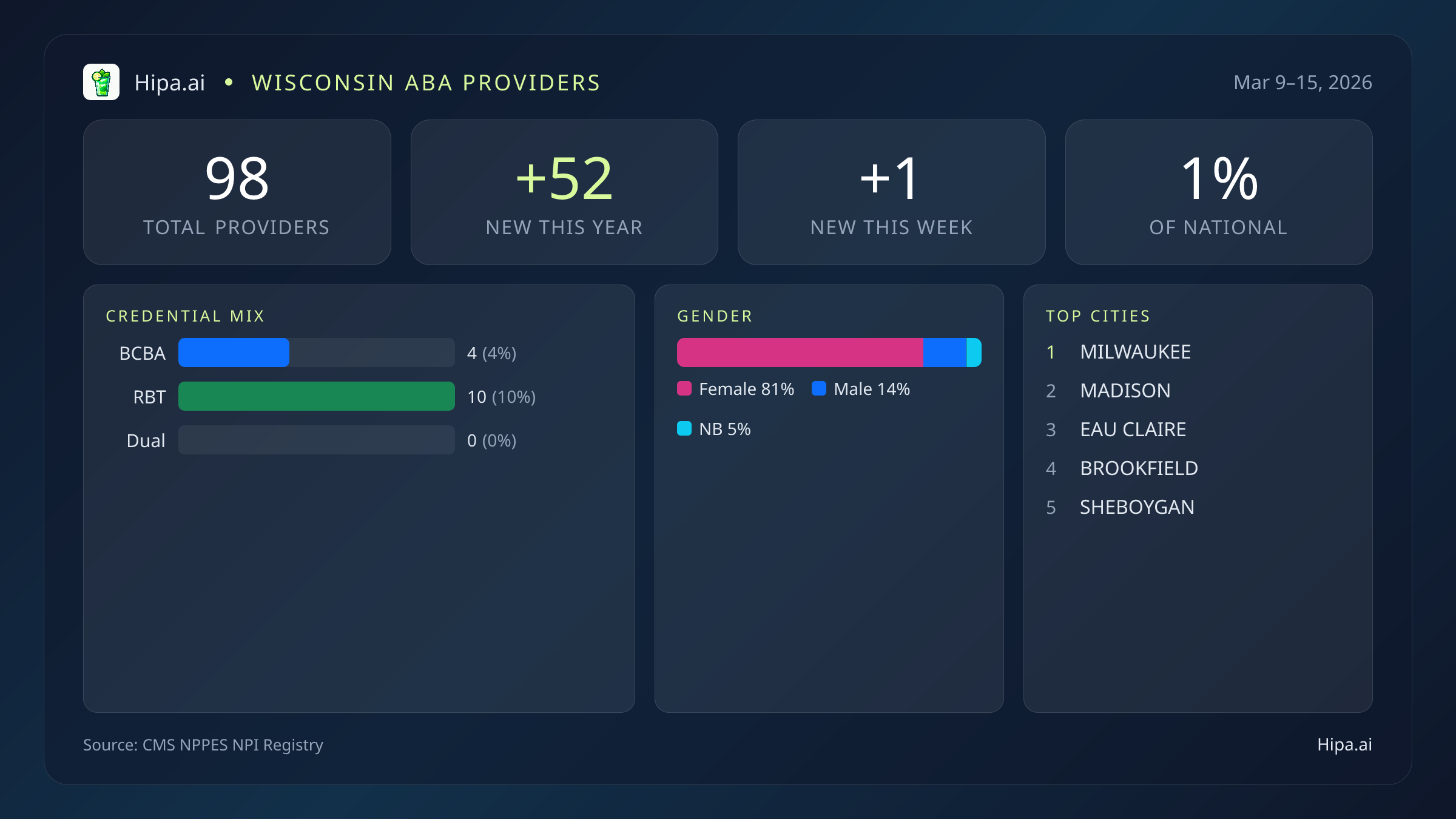
Wisconsin saw 98 total providers in the latest CMS NPI registry update, representing just 1% of the national weekly total. This relatively low concentration suggests a smaller or slower-growing behavioral health workforce compared to other states. Only 1 new provider was added this week, contributing to 52 new providers this year, indicating modest growth in the state's behavioral health sector.
Credential Mix and Supervision Capacity
Among individual providers, the data shows 4 BCBAs and 10 RBTs. Notably, no individuals were reported with dual BCBA and RBT credentials in this dataset. The ratio of RBTs to BCBAs is 2.5 to 1, which highlights a constrained supervisory capacity within the ABA workforce. While direct service providers are present, the limited number of BCBAs could impact the scalability and quality oversight of ABA services. Beyond ABA, the registry also includes various other behavioral health professionals, such as 9 Licensed Professional Counselors (LPCs) and 4 Licensed Clinical Social Workers (LCSWs), indicating a broader mental health support system.
Workforce Demographics
The demographics for individual providers in Wisconsin reveal a significant gender imbalance, with 69 female providers accounting for 81% of the total. In contrast, 12 male providers represent 14%, and 4 providers identified as nonbinary, comprising 5%. No organizations appeared multiple times in this week's data, suggesting a dispersed organizational presence rather than dominance by specific entities. Furthermore, 19 providers held multiple taxonomies, indicating a diverse range of skills or practice areas among these professionals.
This data suggests a behavioral health workforce in Wisconsin that is predominantly female and growing at a measured pace, with a critical need to foster BCBA growth to ensure adequate supervision and expand access to ABA services statewide.