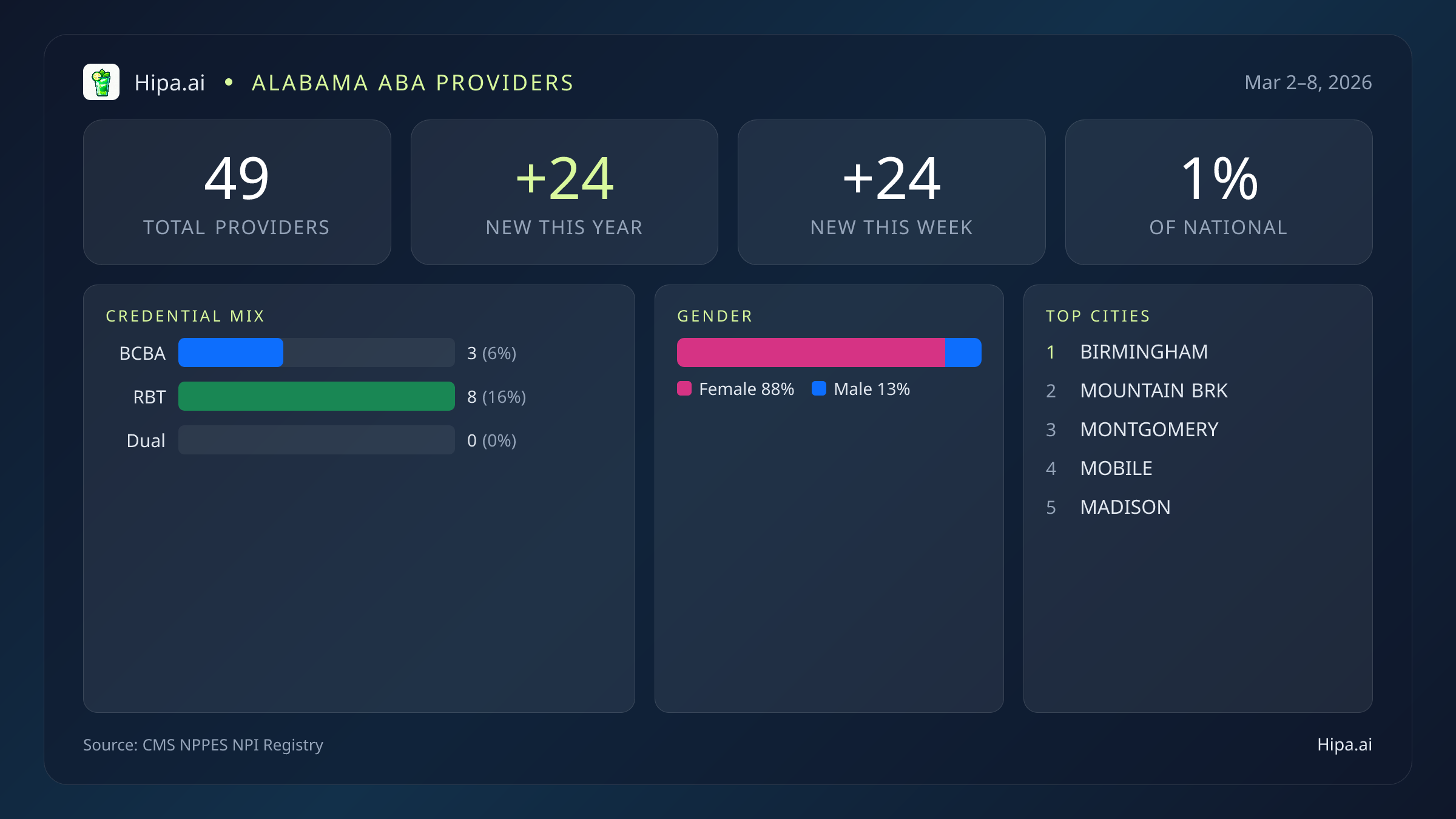
Alabama saw 49 new behavioral health providers added to the CMS NPI registry this week, representing 1% of the national total. This modest concentration suggests a steady, rather than explosive, growth in the state's behavioral health workforce, which is typical for many regional markets.
Credential Mix and Supervision Capacity
Among the individual providers, the state gained 3 Board Certified Behavior Analysts (BCBAs) and 8 Registered Behavior Technicians (RBTs). There were no providers with dual BCBA and RBT credentials noted this week. The ratio of BCBAs to RBTs, roughly 1 BCBA for every 2.6 RBTs added, is a critical indicator for supervision capacity within the ABA sector. While this ratio is healthier than in some states, a sustained increase in BCBAs is essential to ensure adequate supervision for the RBT workforce, supporting quality care and career progression.
Workforce Demographics
Of the 40 individual providers added, 35 individuals (88%) were female, while 5 individuals (13%) were male. This gender distribution aligns with the national trend of a predominantly female behavioral health workforce. Major cities like Birmingham, Mountain Brook, Montgomery, Mobile, and Madison were among the top locations for these new providers. No single organization appeared multiple times in this week's data, indicating a diverse range of practice settings rather than dominance by a few large entities.
This week's data suggests continued, albeit measured, growth in Alabama's behavioral health workforce, with a particular need to monitor BCBA growth to support the expanding RBT base and ensure accessible, high-quality ABA services.