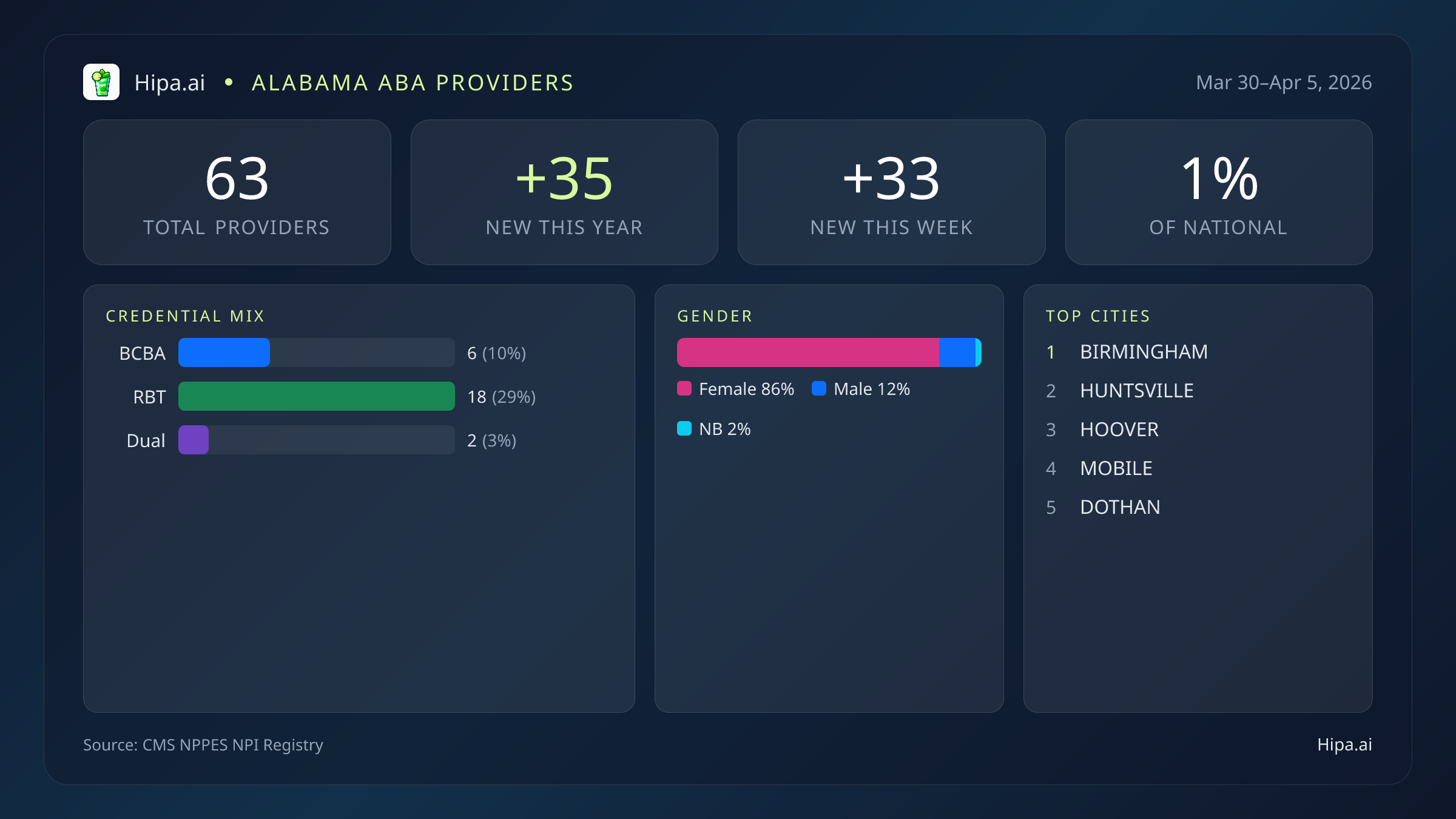
Alabama saw 63 behavioral health providers appear in the latest CMS NPI registry weekly update, representing 1% of the national weekly total. Of these, 33 providers were newly added this week, contributing to a total of 35 new providers for the year. This indicates a consistent, albeit modest, rate of growth in the state's behavioral health workforce. The majority of these new entries were individuals, accounting for 51 providers, while 12 organizations also registered, suggesting a mix of independent practitioners and expanding clinic footprints.
Workforce Composition and Supervision Capacity
Delving into the credentialing data, Alabama's new entries include 6 professionals holding BCBA credentials and 18 individuals identified as RBTs. This yields a ratio of three RBTs for every BCBA, which is a common but often challenging ratio for ensuring adequate supervision in ABA clinics. Importantly, 2 individuals hold dual BCBA and RBT credentials, signifying professionals who are qualified to both provide direct therapy and supervise RBTs, a valuable asset for maintaining service quality and supporting career progression within the field. Beyond ABA-specific credentials, the data also shows a diverse range of other behavioral health professionals, including 7 LPCs, indicating a broader spectrum of mental health services being developed.
Demographics and Practice Diversity
The demographic breakdown of individual providers reveals a workforce predominantly comprised of women, with 44 female providers making up 86% of the total. Male providers account for 6 individuals, or 12%, and 1 provider identifies as nonbinary, representing 2%. This strong female representation aligns with national trends in many behavioral health disciplines. Furthermore, 13 providers reported holding multiple taxonomies, suggesting a versatile workforce capable of offering a broader scope of services or specializing in overlapping areas of care within the behavioral health landscape. The top cities for these new providers include Birmingham, Huntsville, and Hoover.
This snapshot of Alabama's behavioral health workforce indicates steady, predominantly individual-led growth, with a critical need for continued development of BCBA-level supervision to support the expanding RBT workforce and enhance access to ABA services across the state.