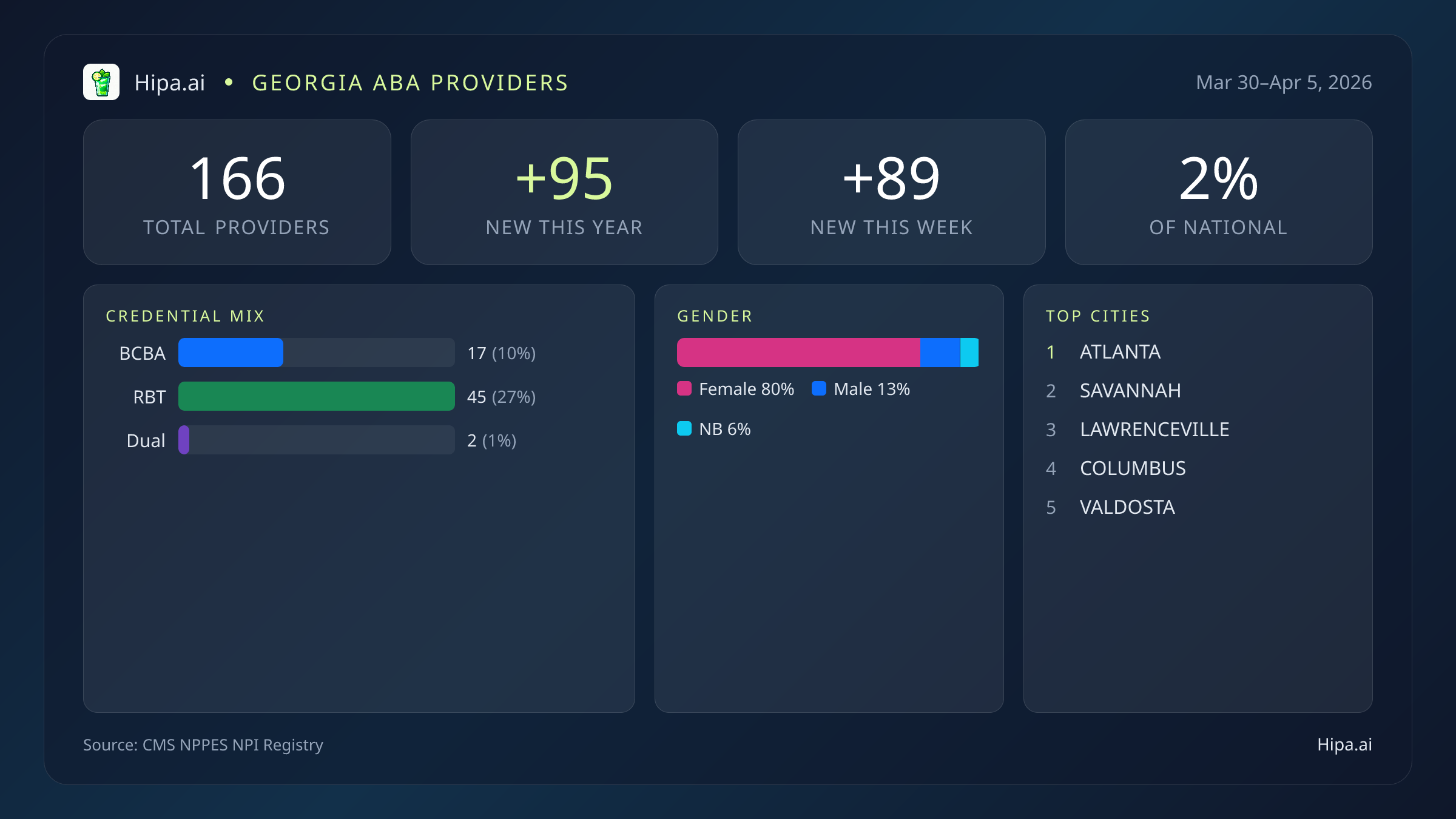
Georgia shows consistent activity in its behavioral health sector, with a total of 166 providers appearing in the latest CMS NPI registry weekly update. This figure represents 2% of the national weekly total, indicating steady, localized growth. Notably, 89 new providers were added this week, contributing to a year-to-date total of 95 new providers for the state, reflecting ongoing development in the behavioral health workforce.
Credential Mix and Supervision Capacity
Analyzing the credential mix, the data shows 17 BCBAs and 45 RBTs among individual providers. It is important to note that these credential counts are not mutually exclusive. For instance, 2 individuals hold dual BCBA and RBT credentials, signifying their capacity for both direct service and supervision. Additionally, one provider holds an "MS, BCBA, LBA" credential, indicating state-level licensure in Applied Behavior Analysis. The ratio of BCBAs to RBTs, approximately 1 to 2.65, suggests a relatively healthy supervisory foundation, which is crucial for ensuring quality and accessible ABA services as the RBT workforce continues to expand.
Workforce Demographics and Organizational Presence
The workforce demographics highlight a predominantly female presence, with 103 providers (80%) identifying as female. There are 17 male providers (13%) and 8 nonbinary providers (6%). Atlanta, Savannah, and Lawrenceville are among the top cities for new provider enrollments. The "GATEWAY COMMUNITY SERVICE BOARD" appeared twice in the organizational data, suggesting its notable and active presence. Furthermore, 31 providers hold multiple taxonomies, indicating a diverse range of skills and service offerings within Georgia's behavioral health community.
This data collectively points to a growing, largely female-led behavioral health workforce in Georgia, supported by a reasonable supervisory structure, which is vital for enhancing access to ABA services across the state.