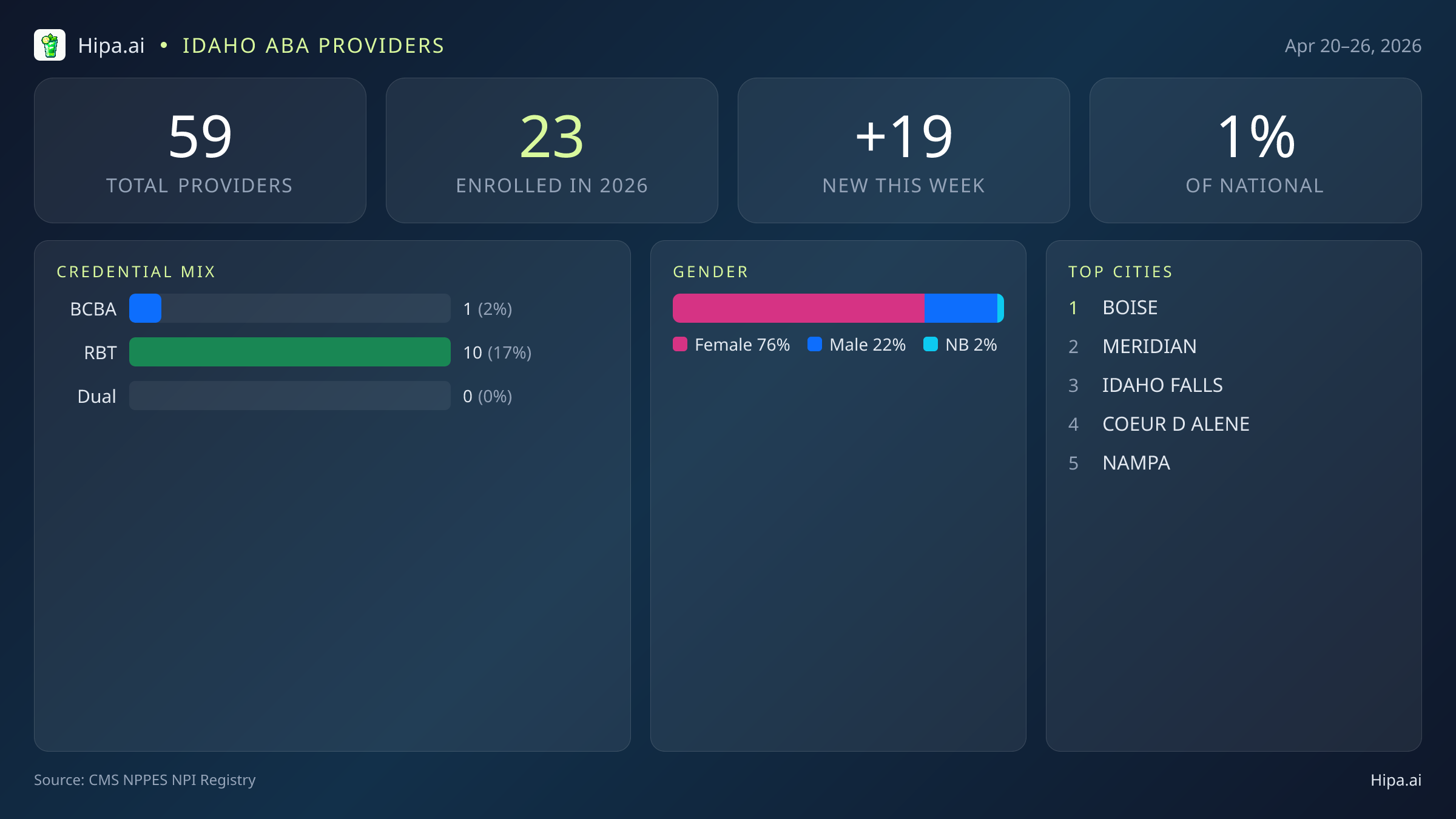
Idaho's behavioral health sector added **59 providers** in the latest national update, representing **1%** of the weekly total. This cohort includes **46 individuals** and **13 organizations**, indicating steady, localized growth in the state's workforce. The activity is concentrated in cities like Boise, Meridian, and Idaho Falls.
ABA Workforce Ratio
The data reveals a significant influx of direct-care staff, with **10 Registered Behavior Technicians** (RBTs) compared to just **1 Board Certified Behavior Analyst** (BCBA). This 10-to-1 ratio could signal a potential supervision bottleneck, as BCBAs are essential for overseeing RBTs and developing treatment plans. The update also included a range of other licensed professionals, including **8 Licensed Clinical Social Workers** (LCSWs). Provider roles are not always distinct; **17 providers** in this group are listed with multiple taxonomies.
Provider Demographics
Among individual providers, the workforce is predominantly female, with **35 women** comprising **76%** of the total. Male providers accounted for **10 individuals** (**22%**), and **1 provider** identified as nonbinary. No large, multi-state ABA chains were prominent in this week's data, suggesting that recent growth is being driven by smaller, independent practices.
This pattern of strong RBT enrollment paired with limited new supervisor capacity suggests that while demand for ABA services in Idaho is rising, access to care may be constrained by the availability of qualified BCBAs.