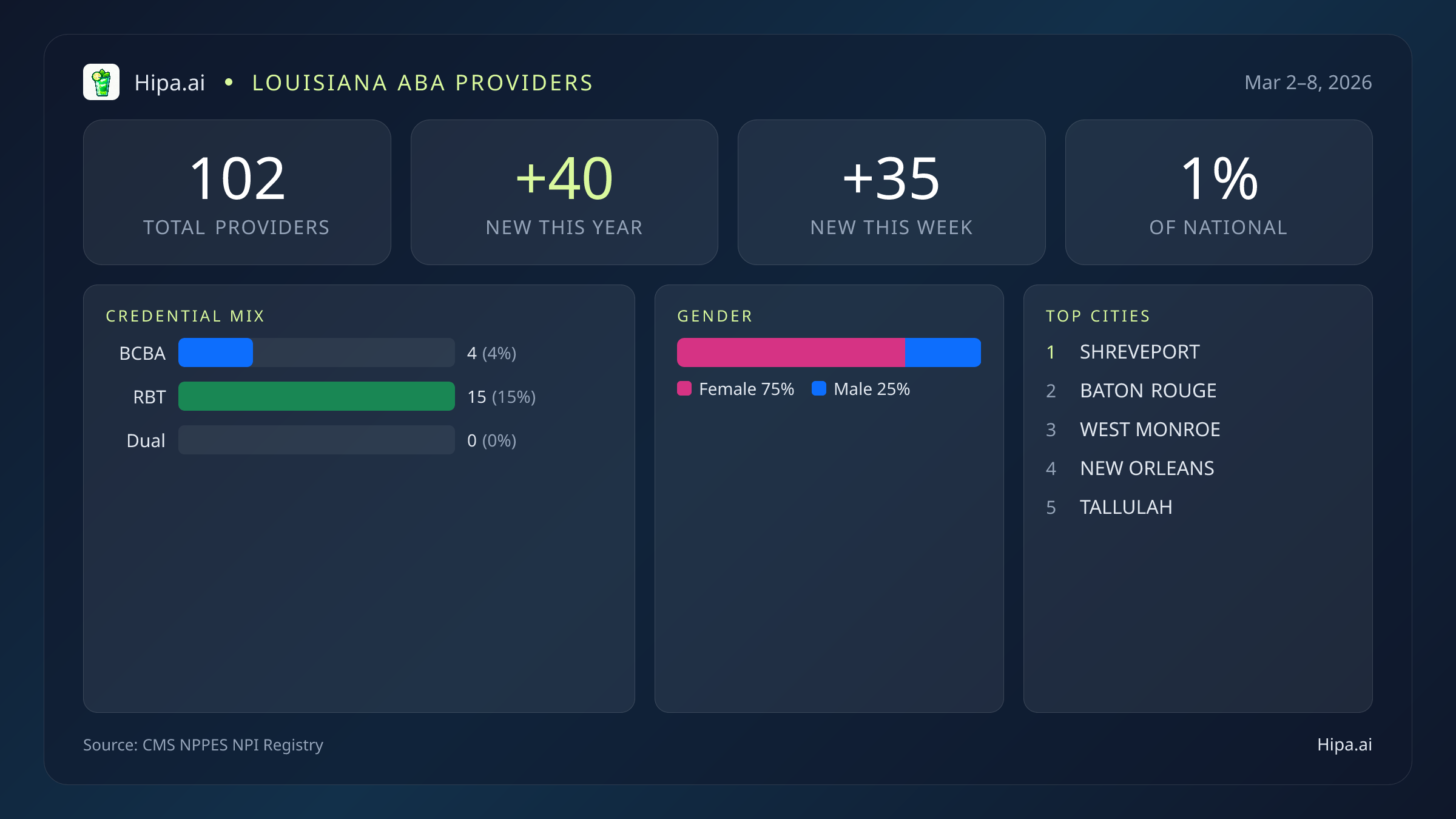
Louisiana has registered a total of **102 behavioral health providers** in the latest CMS NPI registry update, representing **1%** of the national weekly total. This level of activity suggests a steady, albeit smaller, contribution to the national behavioral health landscape. This week alone, **35 new providers** joined the registry in Louisiana, contributing to **40** new additions within the state so far this year, indicating ongoing growth and expansion within the sector.
Credential Mix and Supervision Capacity
Delving into the credential mix for individual providers, there are **4 BCBAs** and **15 RBTs** reported. Notably, there are no individuals holding both BCBA and RBT credentials in this update. This ratio of RBTs to BCBAs highlights the critical need for supervisory capacity, as BCBAs are responsible for overseeing the direct implementation of ABA therapy by RBTs. The presence of a larger RBT workforce relative to BCBAs indicates a strong demand for direct service delivery. Beyond ABA-specific roles, the state also saw registrations for **9 LPCs** and **4 LCSWs**, reflecting a broader spectrum of behavioral health services. Additionally, **34 providers** reported multiple taxonomies, suggesting a diverse and multi-faceted skill set within the workforce.
Workforce Demographics and Organizational Presence
The behavioral health workforce in Louisiana is predominantly female, with **63 female providers** making up **75%** of the individual registrants. Male providers number **21**, accounting for **25%** of the individual workforce. Among the **18 organizations** listed, DESTINED FOR A CHANGE, INC and LOUISIANA YOUTH AND FAMILY NETWORK each appeared multiple times, indicating their significant operational presence across different locations or service lines within the state. These organizations likely play a key role in delivering services and employing a portion of the state's behavioral health professionals.
This data suggests a growing behavioral health workforce in Louisiana, with a strong emphasis on direct ABA therapy roles, which is crucial for addressing the state's demand for services and expanding access to care.