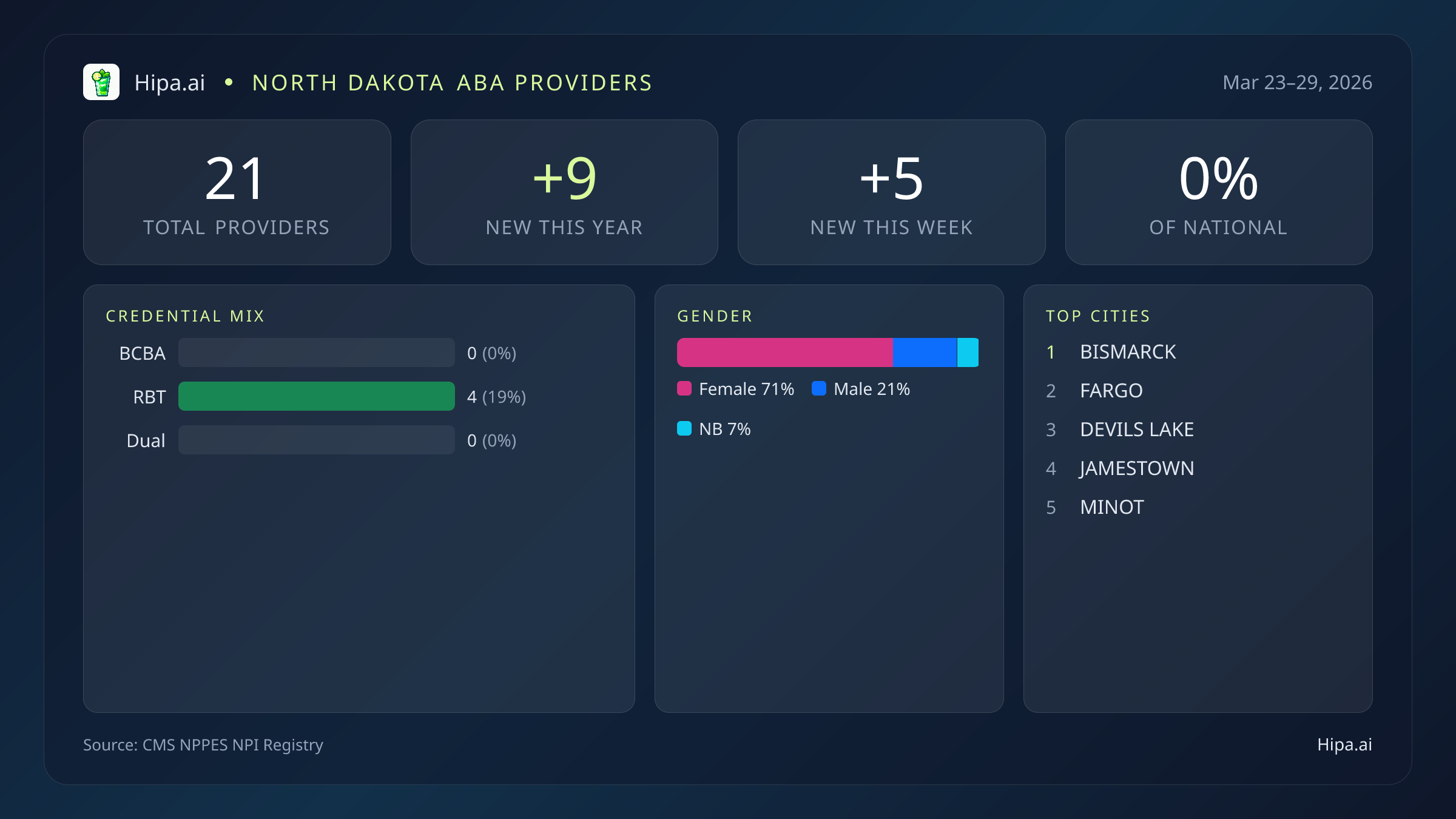
North Dakota's behavioral health sector includes 23 providers in the latest national NPI registry update, a figure representing less than 1% of the weekly total. This small cohort, comprising 15 individuals and 8 organizations, reflects the state's low-density market. Of these, 5 providers were new registrations this week, bringing the year-to-date total to 9 new providers and indicating a slow but consistent rate of workforce entry.
Credential Composition
Within the applied behavior analysis field, the update captured 4 RBTs but no new BCBAs. This imbalance, with zero new supervisors to match the incoming direct-care staff, suggests that these RBTs will rely on the state's existing, and likely limited, pool of BCBAs for required supervision. The data also included a mix of other licensed professionals, such as 2 Licensed Professional Clinical Counselors (LPCCs) and several addiction and social work specialists. Notably, 10 providers in the dataset listed multiple taxonomies, pointing to a versatile but small workforce.
Workforce Demographics
Among the individual providers, the workforce is predominantly female, with women comprising 73% of the group. Men account for 20%, and 7% identify as nonbinary. No single organization appeared multiple times, suggesting the provider landscape consists of smaller, independent practices rather than large, multi-state chains. Provider activity was concentrated in cities including Bismarck, Fargo, and Devils Lake.
This data highlights a fragile ABA ecosystem in North Dakota, where growth in the RBT workforce without a corresponding increase in BCBAs could create significant challenges for supervision and access to care.