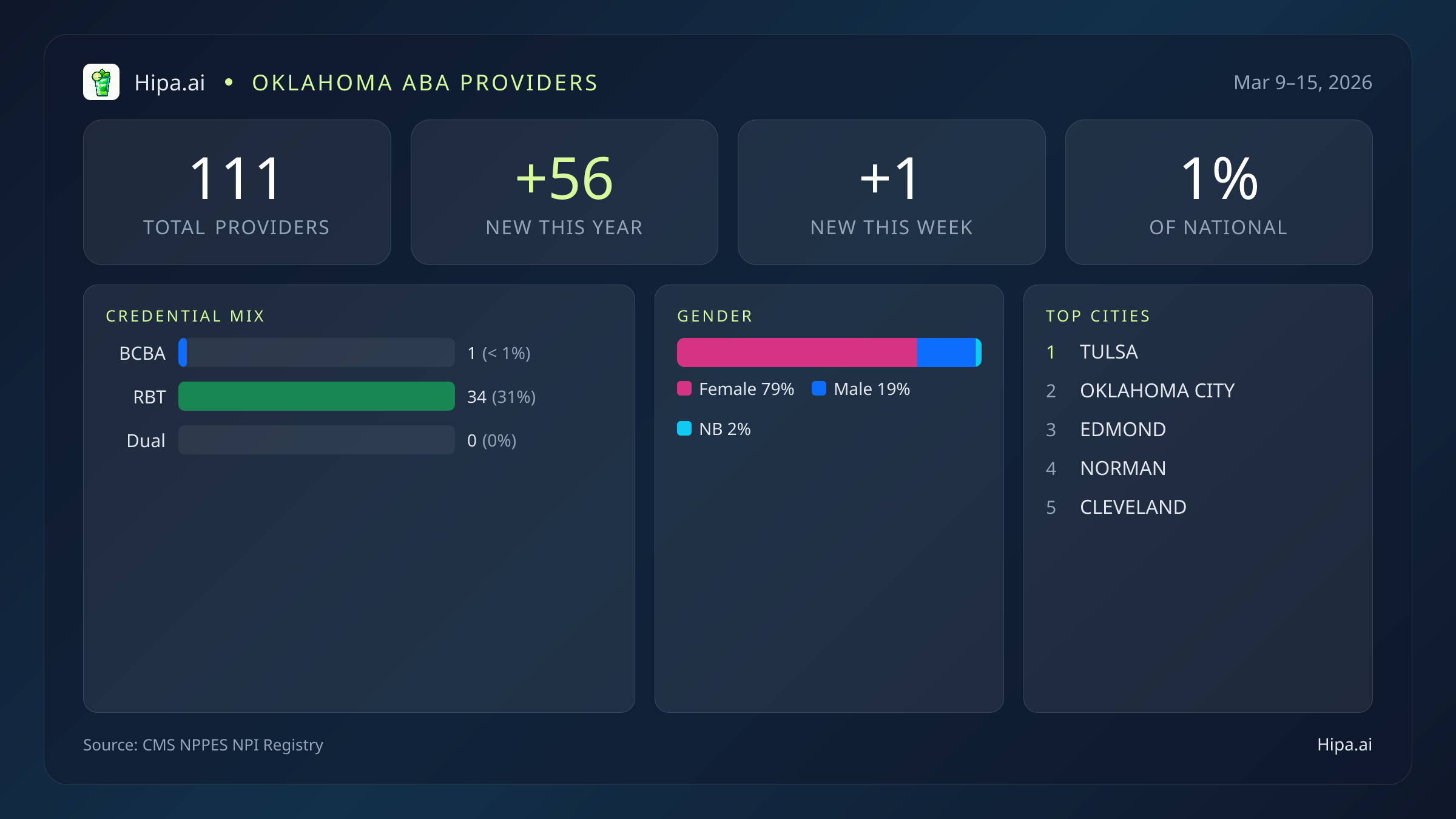
Oklahoma registered a total of 111 providers in the latest CMS NPI registry weekly update, accounting for 1% of the national weekly additions. This week saw only 1 new provider enroll, contributing to 56 new providers added in Oklahoma this year. The majority of these entries are individual practitioners, with 95 individuals and 16 organizations represented. This consistent, albeit smaller, influx of providers suggests a steady, rather than explosive, growth trajectory for behavioral health services in the state.
Credential Mix and Supervision Capacity
Delving into the credential data for this update reveals 1 BCBA and 34 RBTs. Notably, there were no providers listed with dual BCBA and RBT credentials in this particular dataset. The ratio of RBTs to BCBAs among these newly updated providers stands at a significant 34:1. While this snapshot doesn't represent the entire state workforce, such a high ratio in new entries highlights a potential challenge for supervision capacity. ABA services are structured with RBTs providing direct care under the supervision of BCBAs. A sustained trend of many more RBTs entering the workforce compared to BCBAs could indicate a growing demand for entry-level direct care staff, but also a critical need for more qualified BCBA supervisors to ensure ethical and effective service delivery across Oklahoma.
Workforce Demographics and Organizational Presence
The demographic breakdown of individual providers shows a clear gender distribution, with 75 female providers making up 79% of the total. Male providers account for 18 individuals, or 19%, while 2 providers identify as nonbinary, representing 2%. There were no specific organizations appearing multiple times in this week's data to highlight. However, 20 providers are listed with multiple taxonomies, indicating a diverse skill set and a broader scope of practice within the behavioral health community. The top cities for provider activity include Tulsa, Oklahoma City, Edmond, Norman, and Cleveland, suggesting concentrated areas of service delivery.
This data collectively suggests a predominantly female-driven, entry-level workforce within Oklahoma's behavioral health sector, with a potential bottleneck in BCBA-level supervision that will be crucial for the expansion and quality of ABA services in the state.