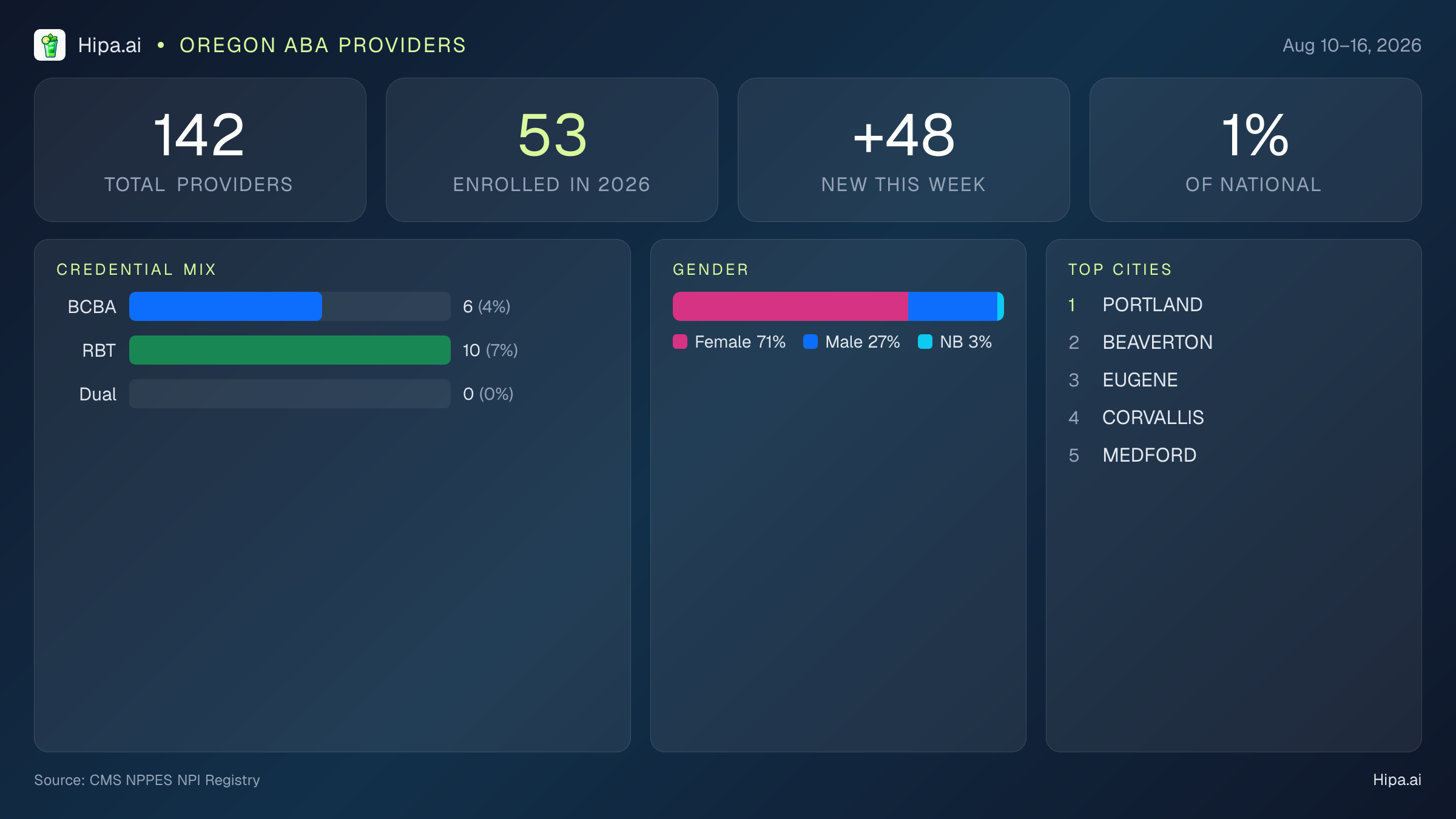
Oregon recorded 142 providers in the latest CMS NPI registry weekly update, representing 1% of the national weekly total. The registry added 48 new providers this week, making Oregon a small but active contributor to national behavioral health expansion. The state’s provider base includes 116 individuals and 26 organizations, indicating that registry growth is occurring across both clinicians and service entities.
ABA Workforce Mix
The registry reports 6 BCBA credentials and 10 RBT credentials, with 0 dual credentials listed for BCBA and RBT. These figures are not mutually exclusive shares of all providers: credential and taxonomy fields overlap, and 44 providers have multiple taxonomies. The registry also separately displays RBT as a credential text for 2 providers, illustrating why field definitions matter when interpreting NPI data. Even with those limitations, the reported RBT-to-BCBA pattern points to more direct-service capacity than supervisory capacity. Because BCBAs oversee RBTs and direct clinical programming, limited BCBA representation could constrain treatment volume as the technician workforce expands.
Demographics and Provider Activity
Gender data covers 116 individuals: 82 female, 31 male and 3 nonbinary providers, listed as 71%, 27% and 3%, respectively. Portland, Beaverton, Eugene, Corvallis and Medford appear among the leading cities, showing activity across Oregon’s major population centers and regional markets. Neurotherapeutic Pediatric Therapies Inc. appears 6 times in the notable-organizations field, making it the clearest repeated organizational presence in the update.
Overall, Oregon’s registry activity suggests expanding behavioral health access, but the relatively small BCBA count signals that supervisory capacity may remain a limiting factor for ABA workforce growth.