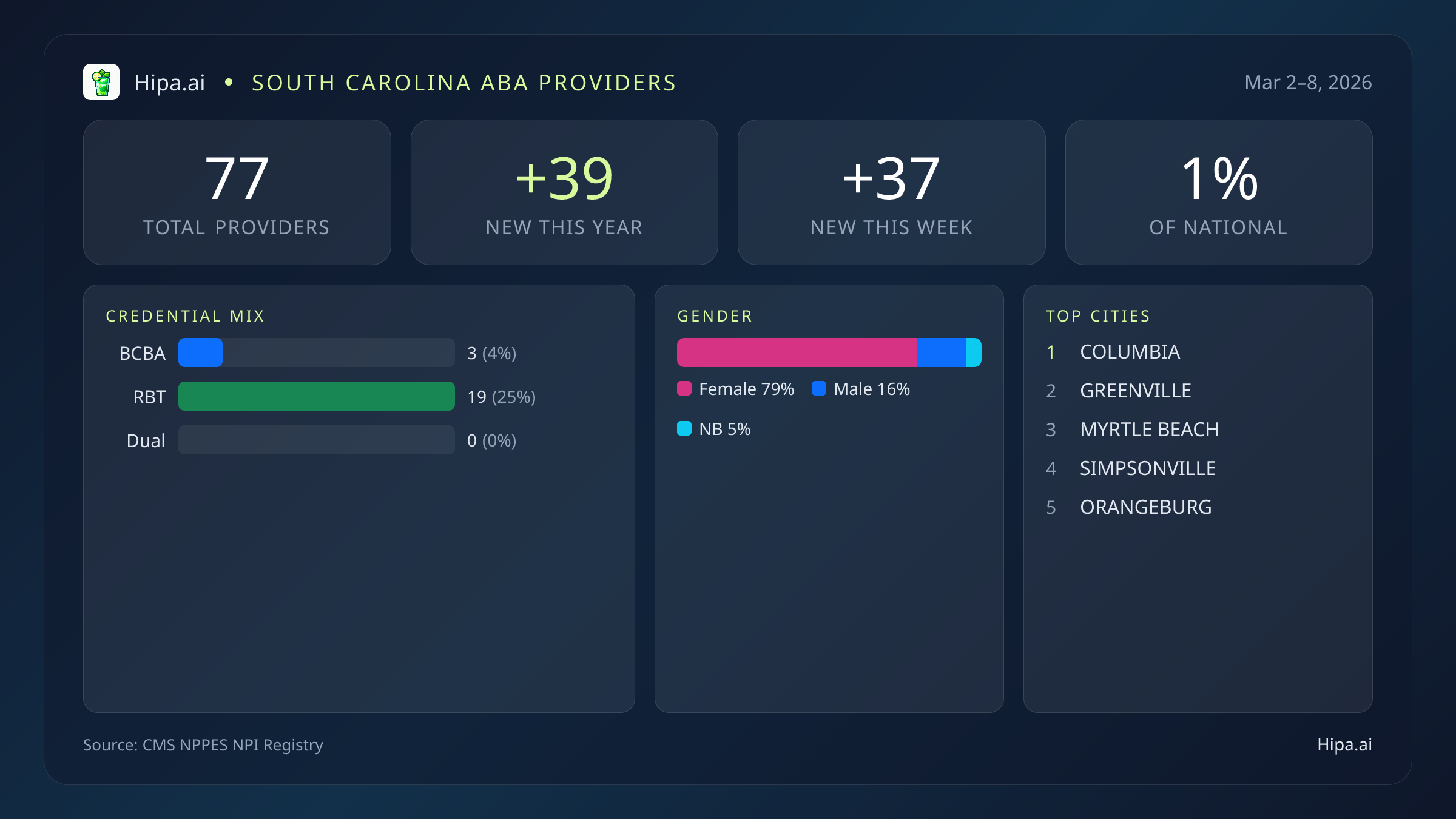
South Carolina saw a notable influx of behavioral health providers in the latest CMS NPI registry update, with a total of 77 providers recorded. This represents 1% of the national weekly total. The state added 37 new providers this week alone, contributing to a total of 39 new providers year-to-date. The majority of these are individual practitioners, totaling 63 individuals, alongside 14 organizations, signaling a growing and dynamic behavioral health landscape.
Credential Mix and Supervision Capacity
Examining the credential mix reveals important insights for the ABA sector. The data shows 3 BCBAs and 19 RBTs. Notably, there are no individuals holding dual BCBA and RBT credentials in this update. The ratio of approximately 6.3 RBTs for every BCBA highlights the critical need for robust supervision capacity within the state. This ratio indicates a strong workforce focused on direct care delivery by RBTs, underscoring the importance of sufficient BCBA oversight to maintain service quality and compliance. Beyond ABA-specific credentials, the registry also includes other behavioral health professionals such as 3 LCSWs and 4 LPCs, indicating a broader spectrum of mental health services.
Workforce Demographics
The workforce demographics in South Carolina show a clear gender distribution among individual providers. Females constitute the largest group, with 50 individuals, representing 79% of the individual providers. Males account for 10 individuals, or 16%, while 3 individuals identify as nonbinary, making up 5%. No specific organizations appeared multiple times in this dataset, suggesting a diverse and fragmented organizational presence rather than dominance by a few large entities. Additionally, 11 providers are registered with multiple taxonomies, indicating a versatile workforce with varied specializations and service offerings.
This data suggests a continued expansion of the behavioral health workforce in South Carolina, particularly at the RBT level, which is vital for increasing access to direct ABA services across the state, though BCBA supervision remains a key area to monitor.