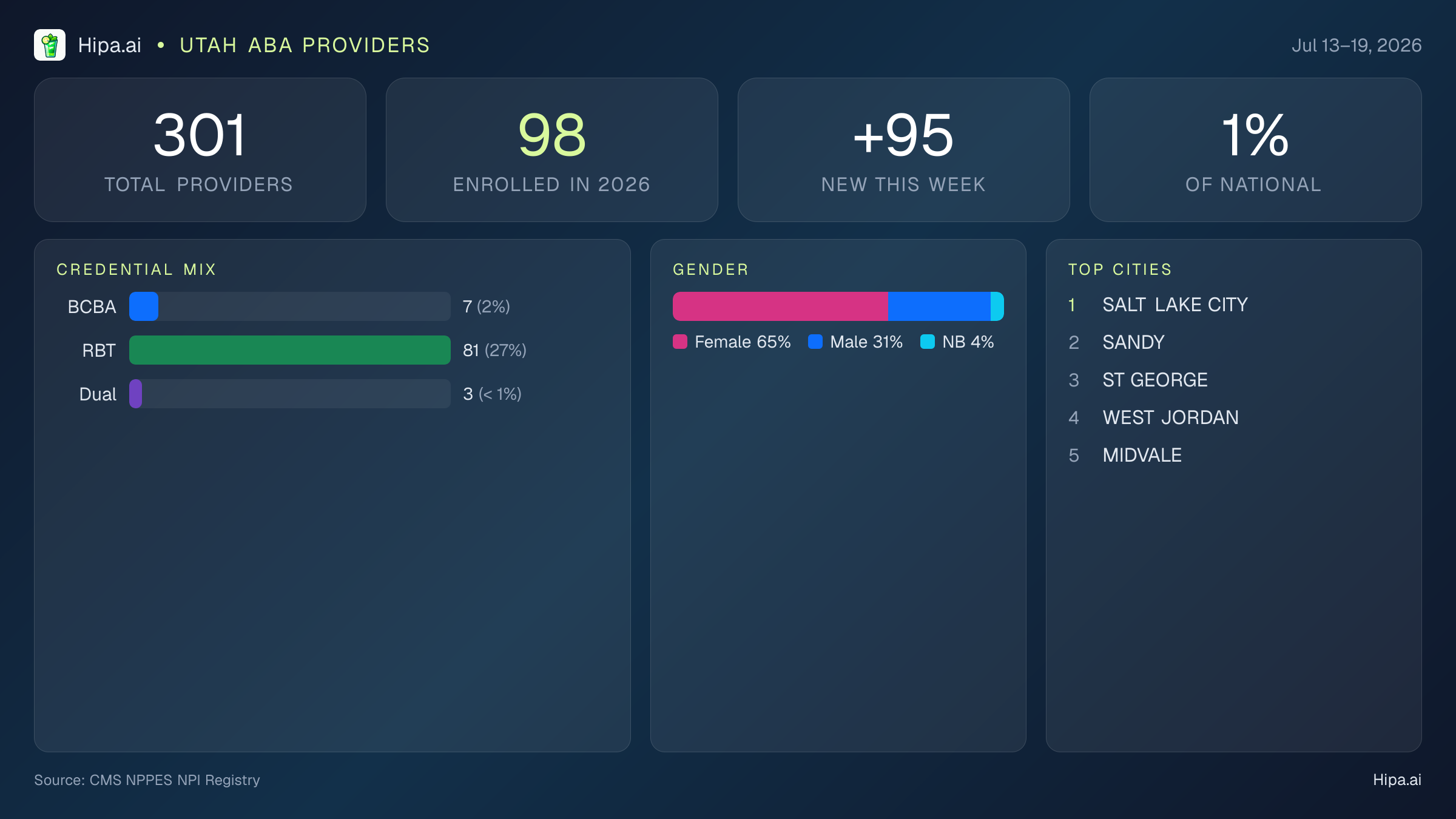
Utah added 301 behavioral health providers in the latest CMS NPI registry weekly update, representing 1% of the national total for the week. This significant influx of new professionals, comprising 291 individuals and 10 organizations, indicates a robust expansion of the state's behavioral health infrastructure, crucial for meeting growing demand.
ABA Workforce Dynamics
Focusing on the Applied Behavior Analysis (ABA) sector, the update shows 7 new BCBA credentials and 81 new RBT credentials. It is important to note that these categories are not mutually exclusive, as 3 individuals hold both BCBA and RBT credentials, signaling career progression or a desire for broader skill sets. The substantial number of RBTs compared to BCBAs suggests a strong pipeline of direct service providers. However, this ratio also highlights a potential need for more BCBAs to ensure adequate supervision capacity, which is essential for maintaining quality ABA therapy and supporting RBT professional development.
Provider Demographics
Among the individual providers, the workforce exhibits a clear gender distribution: 189 (65%) are female, with 91 (31%) male and 11 (4%) identifying as nonbinary. This demographic breakdown generally aligns with national trends in behavioral health, where female professionals often constitute a majority. No specific organizations appeared multiple times in this week's data, suggesting a diverse and fragmented provider landscape rather than dominance by a few large multi-state chains.
Overall, this data suggests a positive trend in Utah's behavioral health workforce expansion, particularly within the ABA field, which is vital for enhancing access to care and supporting the state's growing population.