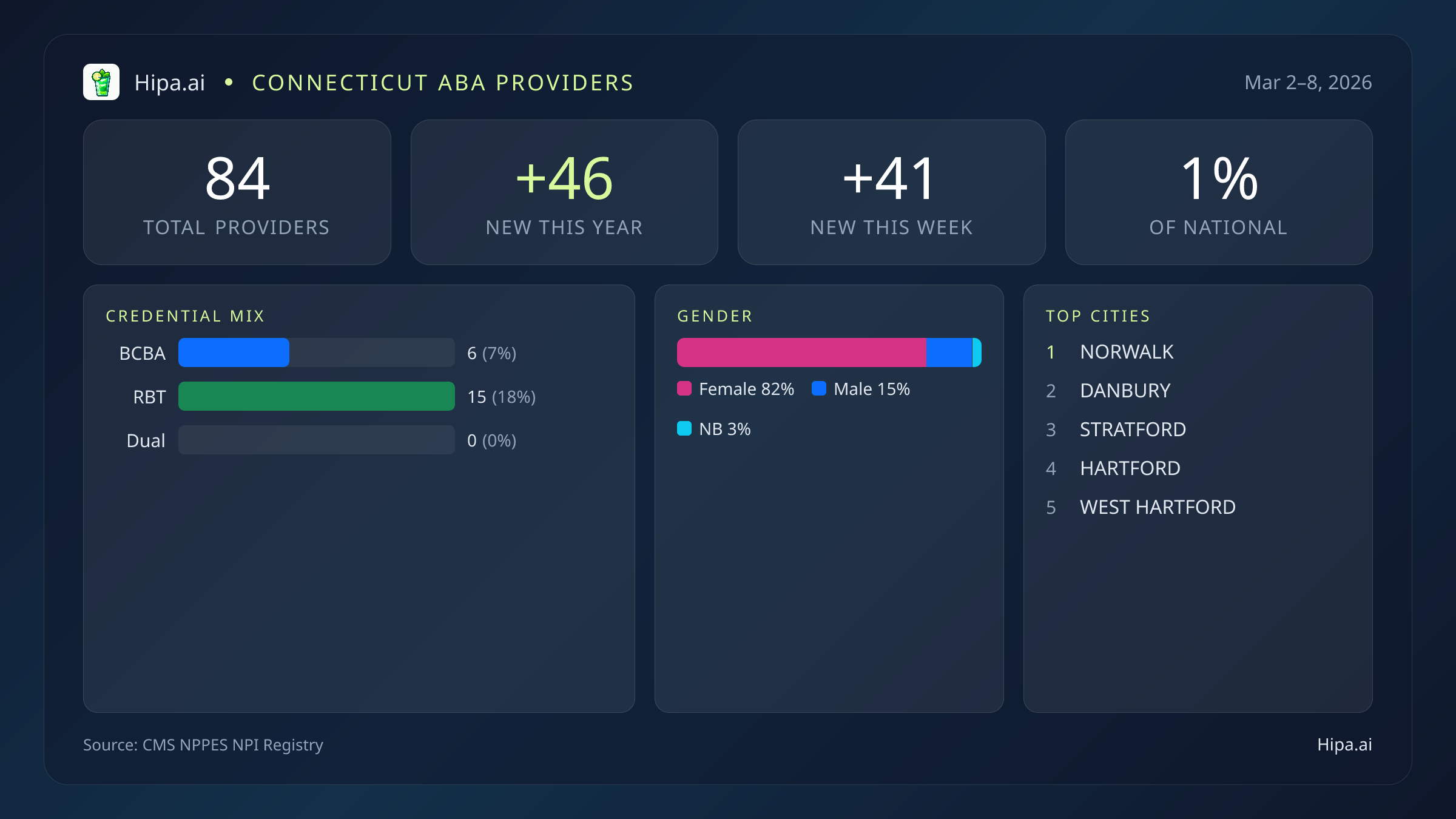
Connecticut added a total of 84 behavioral health providers to the CMS NPI registry in the latest weekly update, representing 1% of the national weekly total. This steady influx of new providers indicates consistent growth in the state's behavioral health sector. Notably, 41 new providers were added this week alone, contributing to a year-to-date total of 46 new providers, highlighting ongoing expansion.
Credential Mix and Supervision Capacity
Delving into the credential mix relevant to Applied Behavior Analysis (ABA), the update shows 6 Board Certified Behavior Analysts (BCBAs) and 15 Registered Behavior Technicians (RBTs) among the individual providers. There were no individuals reported as holding both BCBA and RBT credentials in this dataset. The ratio of RBTs to BCBAs, at 2.5 to 1, is lower than in some other regions, which could suggest a more balanced, albeit smaller, growth in both direct service and supervisory roles. This ratio is critical for ensuring that RBTs receive the necessary supervision from qualified BCBAs, supporting quality care. Beyond ABA, the state also saw a significant number of other behavioral health professionals, including 17 Licensed Clinical Social Workers (LCSW) and 6 Licensed Professional Counselors (LPC), reflecting a broad demand for mental health services.
Workforce Demographics
The demographic breakdown of the individual providers reveals a predominantly female workforce, with 60 female providers accounting for 82% of the total. 11 male providers represent 15%, while 2 providers identify as nonbinary, making up 3%. This week's data did not show any single organization appearing multiple times, suggesting a decentralized entry of new providers rather than a dominant presence from multi-state chains. Additionally, 14 providers are listed with multiple taxonomies, indicating a diverse range of specializations and service capabilities within Connecticut's behavioral health workforce.
This data suggests a measured expansion of Connecticut's behavioral health workforce, with a particular focus on maintaining adequate supervisory capacity for direct ABA services.