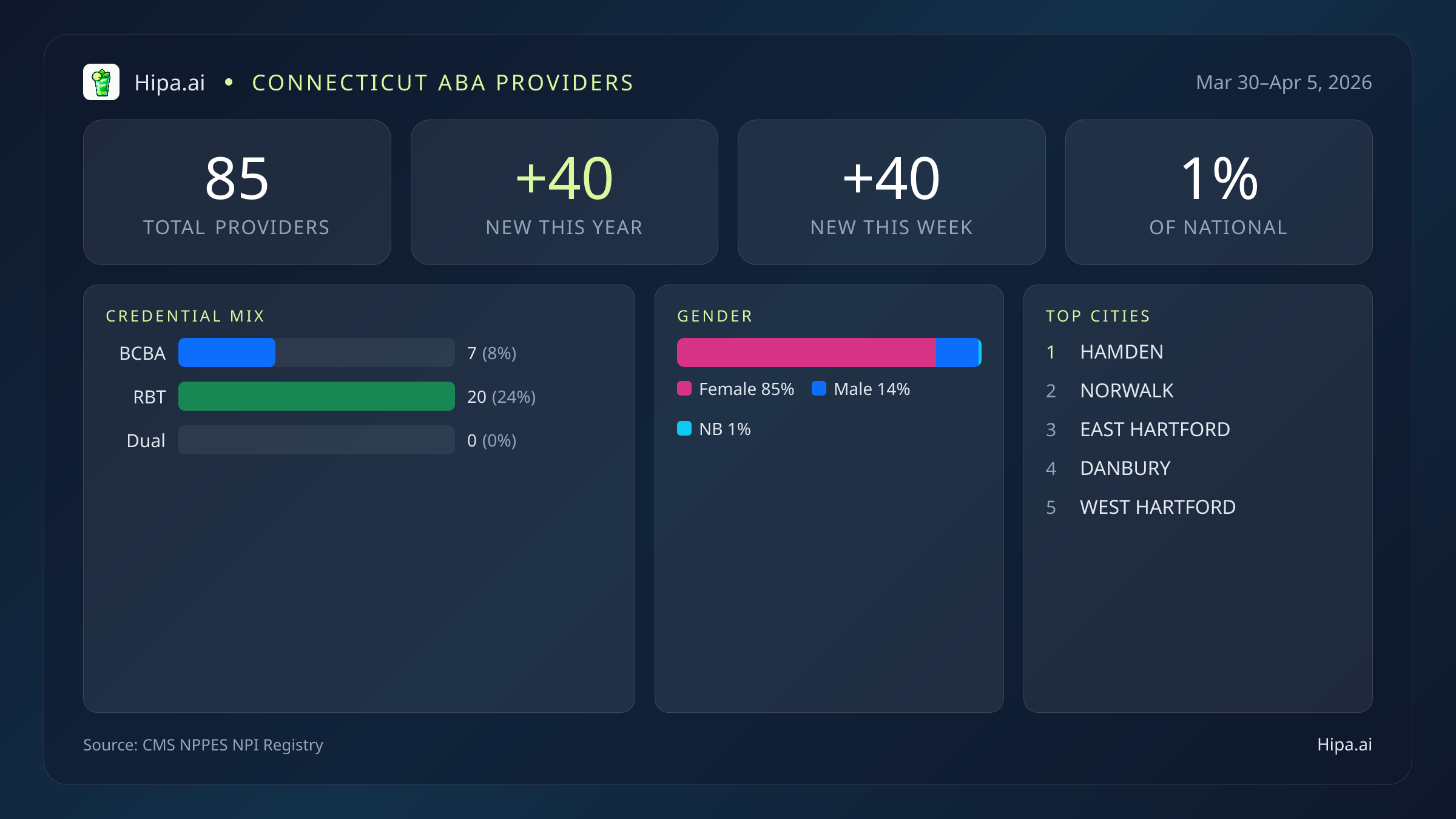
Connecticut's behavioral health sector saw 85 providers in the latest CMS NPI registry weekly update. This represents 1% of the national weekly total, indicating a modest, but present, level of activity for the state. A significant portion of these are recent additions, with 40 providers new this week, also marking the total for new providers this year. The majority of these are individual practitioners, totaling 73 individuals, alongside 12 organizational entities.
ABA Workforce Dynamics
Within the credentialed workforce, the data shows 7 individuals holding BCBA credentials and 20 individuals with RBT credentials. Notably, there were no providers with dual BCBA and RBT credentials identified in this update. The ratio of RBTs to BCBAs is approximately 2.85 to 1. This relatively low ratio suggests a potentially more manageable supervisory load for BCBAs in Connecticut compared to states with higher RBT-to-BCBA ratios, which can be a positive indicator for the quality and oversight of ABA services. Beyond ABA-specific credentials, the state also saw a notable presence of other behavioral health professionals, including 12 Clinical Social Workers (LCSW/L.C.S.W) and 4 Licensed Professional Counselors (LPC/MS, LPC).
Provider Demographics and Practice Diversity
The workforce demographics highlight a strong female presence, with 62 female providers accounting for 85% of individual practitioners. Male providers totaled 10 individuals, representing 14%, while 1 provider identified as nonbinary, making up 1%. No specific organizations appeared multiple times in this week's data, suggesting a broad distribution of organizational presence rather than concentrated growth from a few large entities. Additionally, 13 providers reported holding multiple taxonomies, indicating a diverse range of specializations and a broader scope of practice within Connecticut's behavioral health community.
Overall, this data suggests a growing, predominantly female-led behavioral health workforce in Connecticut, with a healthy RBT-to-BCBA ratio that could support accessible and well-supervised ABA services across the state.